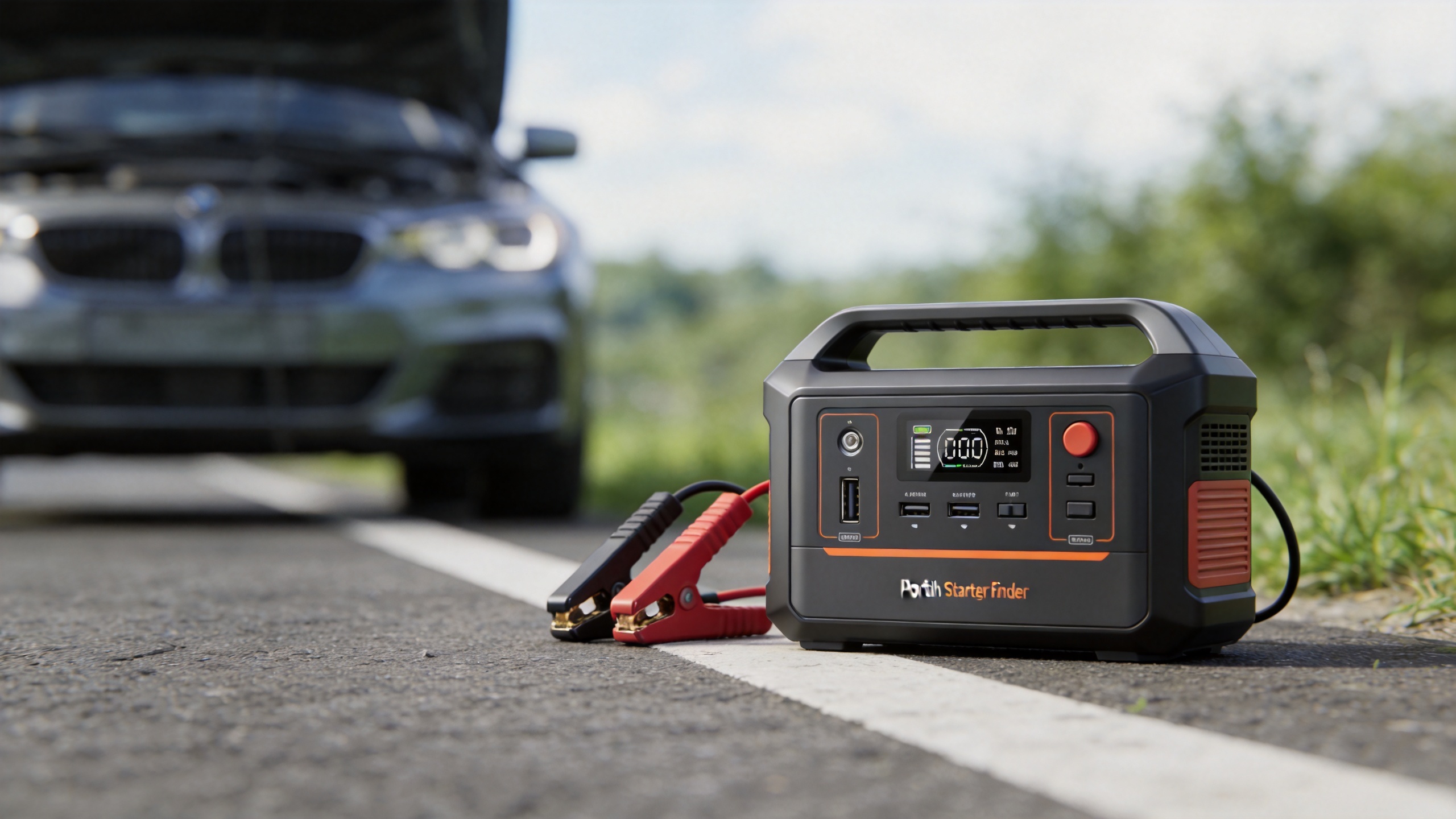
Finding yourself stranded with a dead battery is a universal driver’s nightmare, but modern technology has turned this once-daunting ordeal into a simple, five-minute task. Choosing the best portable car jump starter involves balancing raw cranking power, safety features, and the specific electrical demands of your vehicle’s engine.
The Essential Guide to Emergency Roadside Power: at a glance
Modern jump starters have shifted away from heavy, lead-acid "jump boxes" toward high-density lithium-ion technology. These devices are compact enough to fit in a glove box or center console while maintaining enough amperage to turn over massive V8 engines. When selecting a unit, you aren't just buying a battery; you are buying an insurance policy for your commute.
Key factors that define the current market include:
- Peak Amperage: The maximum current the device can deliver in a short burst.
- Safety Protections: Reverse polarity protection, spark-proof technology, and over-current safeguards are now industry standards.
- Versatility: Many units now function as power banks for smartphones, laptops, or even as high-lumen emergency flashlights.
- Climate Resilience: How the internal battery chemistry reacts to extreme heat or freezing temperatures.
For a broader look at how these tools rank against one another, you can explore our comprehensive list of [The 8 Best Portable Jump Starters for 2026]( /best/best-portable-jump-starters-2026).
Understanding Cranking Amps vs. Peak Amps
A common mistake buyers make is focusing solely on the "Peak Amps" number printed on the box. Marketing departments often inflate this figure, which represents the current the device can output for a fraction of a second. In reality, you should look for the "Cranking Amps," which is the sustained power required to actually turn the starter motor.
If you drive a standard sedan, a unit like the [NOCO Boost GB40]( /product/noco-boost-gb40) is often sufficient. However, if you are operating a heavy-duty truck or a large diesel engine, you need to look at the sustained output of more robust units like the [NOCO Boost X GBX155]( /product/noco-boost-x-gbx155) or the [NOCO Boost Max GB250]( /product/noco-boost-max-gb250). Always match the device's output to your engine displacement to ensure you aren't left underpowered in a crisis.
Head-to-head: Lithium vs. Lead-Acid
The debate between lithium-ion power and traditional lead-acid jump starters is ongoing. Lead-acid units, such as the [Clore Automotive JNC660]( /product/clore-automotive-jnc660) and the [Clore Automotive JNC770R]( /product/clore-automotive-jnc770r), are heavy, bulky, and require frequent recharging to prevent battery degradation. However, they are incredibly durable and often provide superior cold-cranking performance in sub-zero environments.
On the other hand, lithium-based units like the [GOOLOO GP4000]( /product/gooloo-gp4000-2) or the [AstroAI S8 Ultra]( /product/astroai-s8-ultra) offer extreme portability and can hold a charge for months at a time. For the average commuter, lithium is the clear winner due to its size-to-power ratio. If you are interested in deep-dive comparisons, check out our [Clore Automotive JNC660 vs JNC770R: Which Professional Jump Box Wins?]( /articles/clore-jnc660-vs-jnc770r) article.
Extreme Weather Performance
Not all jump starters are built to withstand the same environments. If you live in a region with harsh winters, a standard lithium pack may struggle to provide the necessary surge. The [GOOLOO GT4000 Arctic]( /product/gooloo-gt4000-arctic) is specifically engineered to perform when temperatures plummet, making it a favorite for those in northern climates.
When storing your device, consider the following:
- Heat: Never leave lithium units in direct sunlight or extreme cabin heat for extended periods, as this can degrade battery life.
- Cold: If you keep your jump starter in the trunk during winter, ensure it is rated for "Arctic" or "Cold Start" performance.
- Maintenance: Even if you don't use the device, check the charge level every 3–6 months to ensure it remains ready for an emergency.
Safety Features You Should Never Ignore
Modern jump starters are far safer than the jumper cables of the past. Advanced circuitry now prevents the most common mistakes that lead to electrical damage. When shopping for the best portable car jump starter, look for these non-negotiable safety features:
- Reverse Polarity Protection: Prevents the device from firing if you accidentally connect the clamps to the wrong terminals.
- Spark-Proof Technology: Ensures that no electrical arc occurs when the clamps touch, which is vital when working near a leaking battery.
- Over-Charge/Over-Discharge Protection: Manages the internal battery health to prevent fire hazards during charging or usage.
For those concerned about safety and reliability, our [The Best Portable Jump Starters of 2026: Expert Tested]( /best/best-portable-jump-starters-2026-6) guide outlines which models passed our rigorous stress tests.
Pricing and Value Tiers
Jump starters vary wildly in price, usually depending on the amperage capacity and the quality of the internal cells. You can find entry-level units for under $100, while professional-grade equipment can cost several hundred dollars.
- Budget Tier ($50–$100): Suitable for compact cars and occasional use. The [NOCO Boost GB40]( /product/noco-boost-gb40) is a gold standard here.
- Mid-Range Tier ($100–$250): Offers higher capacity for SUVs and light trucks. Products like the [GOOLOO GP4000]( /product/gooloo-gp4000-2) provide excellent value for the money.
- Professional Tier ($250+): Built for high-displacement diesels and frequent use. The [NOCO Boost Max GB250]( /product/noco-boost-max-gb250) falls into this category, offering massive power for heavy-duty applications.
Who Should Pick Which
Choosing the right tool depends entirely on what you drive and where you drive it.
- The Daily Commuter: You drive a standard sedan or crossover. You need something small that won't take up much space. Look at the [AstroAI S8 Ultra]( /product/astroai-s8-ultra) or the [NOCO Boost X GBX55]( /product/noco-boost-x-gbx55).
- The Off-Roader/Truck Owner: You have a large engine and often find yourself in remote areas. You need the rugged reliability of the [NOCO Boost GB150]( /product/noco-boost-gb150) or the [GOOLOO GT4000 Arctic]( /product/gooloo-gt4000-arctic).
- The Professional/Fleet Manager: You need a unit that can handle dozens of jump starts a week. The [Clore Automotive JNC770R]( /product/clore-automotive-jnc770r) is the industry standard for durability.
If you are still unsure, our guide on [Selecting the Right Jump Starter for Your Vehicle Type]( /articles/choosing-portable-jump-starter) provides a step-by-step framework for making your decision.
Capacity and Multi-Device Utility
Many modern jump starters act as "power stations" in your pocket. The [Primedura DM1264]( /product/primedura-dm1264) and similar units often include USB-C PD (Power Delivery) ports, allowing you to charge laptops, tablets, and phones at high speeds. This makes them invaluable for road trips or camping.
However, remember that every time you use your jump starter to charge your phone, you are depleting the capacity available for an emergency jump start. Always prioritize maintaining a full charge for the primary purpose of the device: starting your engine.
Maintenance and Longevity
To get the most out of your investment, treat your jump starter like a dedicated tool rather than a disposable gadget. Lithium-ion batteries naturally lose charge over time, even when not in use.
- Recharge after use: Even if you only used a small amount of power, top it off as soon as you get home.
- Store in a dry place: Moisture is the enemy of the internal circuit boards.
- Inspect the cables: Check the clamps for corrosion or fraying every time you perform a routine charge check.
For more information on comparing high-capacity units, see our breakdown in [NOCO Boost GB150 vs GBX155: Comparing Heavy-Duty Lithium Starters]( /articles/noco-gb150-vs-gbx155).
Frequently Asked Questions
How do I know if my jump starter is powerful enough for my car?
Check your vehicle’s owner's manual for the "Cold Cranking Amps" (CCA) requirement of your battery. Ensure your jump starter’s peak amperage is significantly higher than your engine's starting requirement. As a rule of thumb, always aim for a unit with a higher capacity than you think you need.
Can I leave my jump starter in the car during summer?
It is generally not recommended. Extreme heat can cause lithium batteries to swell or leak, significantly reducing their lifespan. If possible, store the unit in a climate-controlled area or at least out of direct sunlight.
How many times can a jump starter start a car on a single charge?
This depends on the capacity of the unit and the state of your car battery. A high-quality unit like the [GOOLOO GP4000]( /product/gooloo-gp4000-2) may provide 20–30 jumps on a single charge, whereas smaller units might only provide 3–5.
Are these devices safe for modern car electronics?
Yes. Modern jump starters feature surge protection and voltage regulation that ensure the jump start process is safe for your vehicle’s sensitive ECU and onboard computer systems. Always follow the manufacturer's connection sequence.
What is the difference between the NOCO Boost and Boost X series?
The Boost X series (like the [NOCO Boost X GBX55]( /product/noco-boost-x-gbx55)) features USB-C fast charging, which allows the device to recharge itself much faster than the standard Boost series. They also offer more robust power delivery for modern electronics.
Verdict
The best portable car jump starter is the one that is charged and ready when you need it most. For most drivers, the [NOCO Boost GB40]( /product/noco-boost-gb40) provides the perfect balance of portability and reliability. If you drive a larger vehicle or live in an extreme climate, the [GOOLOO GT4000 Arctic]( /product/gooloo-gt4000-arctic) or [NOCO Boost X GBX155]( /product/noco-boost-x-gbx155) will offer the peace of mind you need. Don't wait for a dead battery to realize the value of these tools; invest in a high-quality unit today to ensure your next roadside emergency is nothing more than a minor inconvenience.