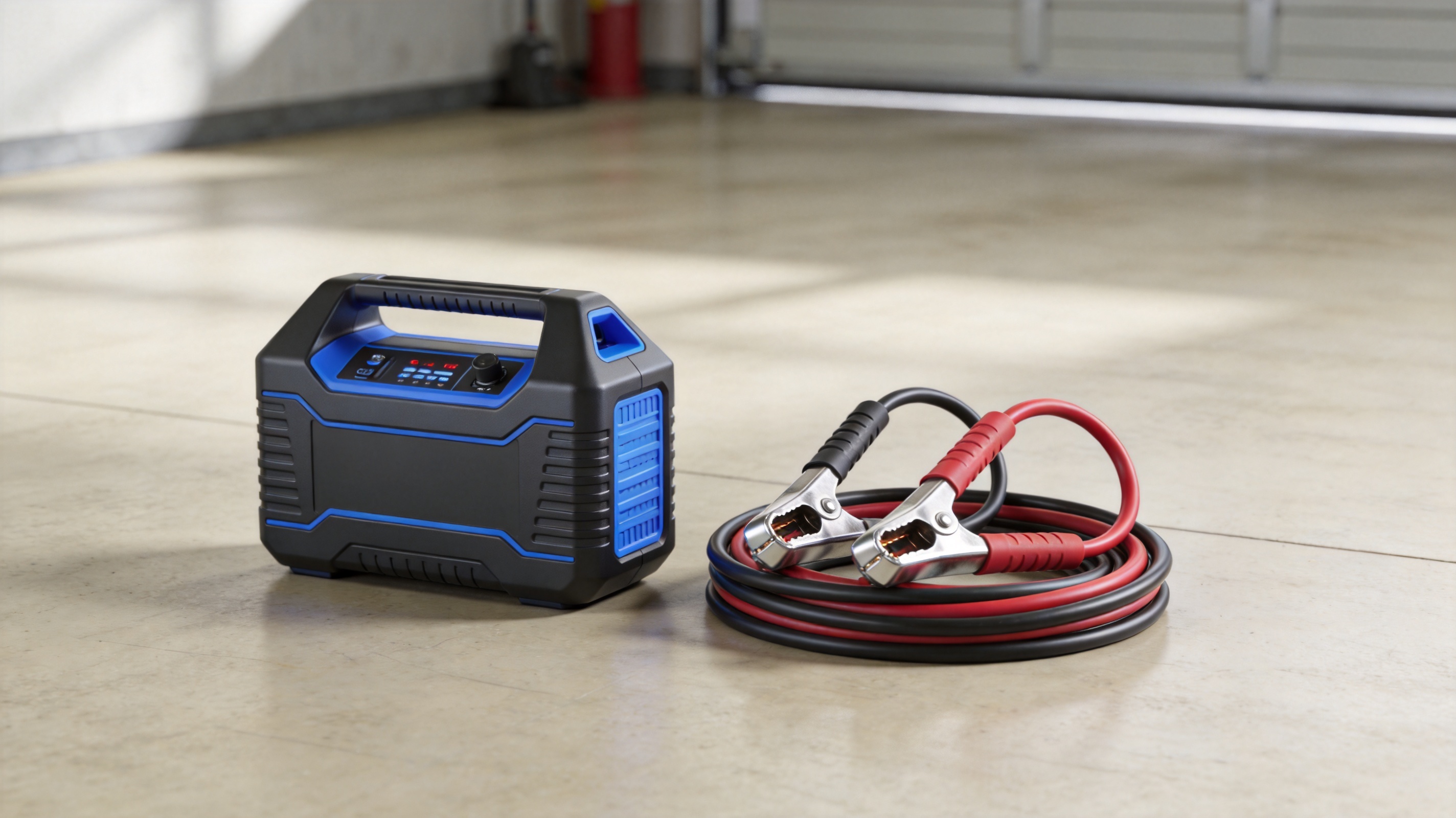
When your engine fails to turn over, the debate between jump starter vs jumper cables often becomes a high-stakes decision made in a dark, cold parking lot. While traditional cables are a classic tool, modern lithium-ion and lead-acid portable jump starters have fundamentally changed the landscape of roadside assistance by offering independence and enhanced safety features.
Portable Jump Starter vs Jumper Cables: Safety and Efficiency: at a glance
The primary difference between these two methods lies in dependence versus autonomy. Jumper cables require a second vehicle with a functional battery, meaning you are reliant on the kindness of strangers or the availability of a second car. Portable units, by contrast, act as a self-contained power supply.
Safety is another major differentiator. Traditional cables carry the risk of short-circuiting if clamps touch, and improper connection sequences can damage sensitive automotive electronics. Modern jump starters, such as the NOCO Boost GB40, feature reverse polarity protection and spark-proof technology, which significantly mitigate the risks associated with human error during a stressful breakdown.
- Jumper Cables: Require a donor vehicle, risk of electrical arcing, no extra features.
- Portable Jump Starters: Independent, built-in safety circuitry, often include USB charging ports and LED flashlights.
- Efficiency: Jump starters provide an immediate, localized power surge, whereas cables require finding a compatible vehicle and positioning it correctly.
Head-to-head: The Technology Behind the Power
When comparing the hardware, we look at the internal chemistry. Traditional cables are simple copper conductors. Portable jump starters, however, use either high-discharge lithium-ion batteries or high-amperage lead-acid batteries. Lithium units like the GOOLOO GP4000 are incredibly compact, making them ideal for glove compartments, while professional-grade lead-acid units like the Clore Automotive JNC660 offer unmatched cranking amps for heavy-duty applications.
The efficiency of a jump starter is measured in "peak amps" and "cranking amps." A unit like the NOCO Boost X GBX55 is designed for rapid energy delivery, capable of waking up a dead battery in seconds. Because these devices are engineered specifically for the task of starting engines, they often provide a cleaner, more consistent flow of electricity than a dying donor vehicle’s battery might.
- Lithium-ion: Lightweight, high energy density, holds a charge for months.
- Lead-acid: Heavy, durable, provides massive surge currents for commercial engines.
- Smart Clamps: Modern units use internal logic to verify a safe connection before releasing power.
Pricing: The Cost of Preparedness
The cost of jumper cables is minimal—usually a one-time purchase of a set of heavy-gauge wires. However, the "hidden cost" is the time spent waiting for help or the potential damage to your car’s alternator if the donor vehicle’s battery is incompatible. A portable jump starter represents a higher upfront investment but acts as an insurance policy.
For budget-conscious drivers, the AstroAI S8 Ultra offers a balanced entry point, providing essential jump-starting capabilities without the premium price tag of professional tools. On the other end of the spectrum, the NOCO Boost Max GB250 is an investment for those who own large diesel trucks or commercial fleets, where the cost of downtime far exceeds the price of the equipment.
- Entry Level: $50–$100 (Basic lithium packs).
- Mid-Range: $100–$250 (High-capacity lithium or standard lead-acid).
- Professional/Commercial: $300+ (Heavy-duty lithium or high-performance lead-acid).
Who Should Pick Which
Deciding between a jump starter vs jumper cables depends heavily on your driving habits and vehicle type. If you drive a modern passenger vehicle and frequently travel alone or in remote areas, a portable unit is essential. You do not want to be stranded on a dark highway waiting for a stranger to pull over.
If you are a professional mechanic or run a fleet, the Clore Automotive JNC770R is the superior choice. Its rugged construction and high cranking capacity are designed for repeated use in a shop environment. Conversely, for the average commuter, the Primedura DM1264 offers a user-friendly interface that requires no technical knowledge to operate safely.
- Commuters/Solo Drivers: Prioritize compact lithium units like the NOCO Boost GB70.
- Truck/SUV Owners: Look for high-capacity units like the GOOLOO GT4000 Arctic.
- Fleet/Shop Managers: Invest in professional-grade gear like the NOCO Boost X GBX155.
Reliability in Extreme Weather
One of the most overlooked aspects of the jump starter vs jumper cables debate is performance in extreme temperatures. Lead-acid batteries, like those in the Clore Automotive JNC660, generally handle cold weather cranking better than some lower-quality lithium batteries. However, modern lithium technology has evolved significantly.
Units like the GOOLOO GT4000 Arctic are specifically engineered to maintain performance in sub-zero conditions. Jumper cables, while immune to temperature effects themselves, are only as good as the donor battery, which is often the first component to fail during a deep freeze.
- Cold Weather Tip: Always keep your lithium jump starter in the cabin rather than the trunk to ensure the internal battery stays within its optimal operating temperature.
- Durability: Lead-acid units are physically tougher but require more frequent maintenance (recharging every 30-60 days).
The Importance of Safety Protocols
When you use jumper cables, the "spark" is a real danger. If you connect the terminals in the wrong order or if the clamps touch, you risk a short circuit that can damage the vehicle's computer (ECU). This is why the industry has shifted toward smart-clamping technology.
Products like the NOCO Boost GB150 use internal processors to detect the battery voltage and polarity before allowing any current to flow. If the clamps are connected incorrectly, the unit simply won't turn on, preventing a catastrophic electrical surge. This level of safety is impossible to achieve with standard copper jumper cables.
- Reverse Polarity Protection: Prevents damage if you cross + and - terminals.
- Short Circuit Protection: Stops power flow if the clamps touch each other.
- Over-discharge Protection: Prevents the jump starter from damaging its own cells.
Ease of Use for the Non-Technical Driver
For many, the sight of a dead battery is intimidating. Jumper cables require a multi-step process: identify positive/negative terminals, connect donor, connect dead, start donor, start dead, disconnect in reverse. Any mistake in this sequence can be costly.
A jump starter simplifies this into a "plug and play" experience. With a device like the AstroAI S8 Ultra, you simply attach the clamps and press a button. The device does the rest. This accessibility makes jump starters a better gift for new drivers or those who are uncomfortable working under the hood.
- Intuitive Indicators: Most units have lights that turn green when the connection is safe.
- Portability: No need to maneuver two cars into a specific position.
- Confidence: Knowing you can solve the problem yourself reduces roadside anxiety.
Versatility Beyond Jump Starting
The modern portable jump starter serves as a multi-tool for your vehicle. Most lithium models include USB-A and USB-C ports, allowing you to charge your phone or laptop during an emergency. Many also feature high-lumen LED flashlights with SOS modes, which are invaluable during a night-time breakdown.
If you are looking for a comprehensive emergency kit, you might consider how these tools integrate into your vehicle's safety gear. For more information on finding the right tool for your specific needs, you can browse The Best Portable Jump Starters for Emergency Car Kits in 2026.
- Power Bank Functionality: Keep your communication devices charged.
- Lighting: Essential for inspecting the engine bay in the dark.
- Air Compressor Combos: Some units include tire inflators, which we cover in detail in The Ultimate Guide to Portable Jump Starters with Air Compressors.
Maintenance and Longevity
Jumper cables are virtually maintenance-free, provided the insulation remains intact. Portable jump starters, however, require a habit of maintenance. Lithium units should be topped off every few months, while lead-acid units must be kept charged to prevent sulfation of the battery plates.
If you choose a professional-grade unit like the Clore Automotive JNC770R, it will last for years of heavy use, provided you follow the manufacturer's charging schedule. For those who prefer a "set it and forget it" approach, high-quality lithium units like those found in The 8 Best Professional-Grade Portable Jump Starters of 2026 provide excellent longevity with minimal intervention.
- Lithium: Charge every 3-6 months.
- Lead-Acid: Keep plugged into a trickle charger if stored for long periods.
- Inspection: Periodically check clamps for corrosion or fraying wires.
Verdict: Which Should You Keep in Your Trunk?
The debate of jump starter vs jumper cables is won by the jump starter in almost every modern scenario. While jumper cables are a reliable backup, they are an antiquated solution that relies on external factors you cannot control. A portable jump starter gives you the power to handle a dead battery on your own terms, safely and efficiently.
For the average driver, a compact, high-quality unit like the NOCO Boost GB40 is the gold standard for peace of mind. For those with larger vehicles or those who want the absolute best performance, exploring The Best Portable Jump Starters of 2026 will help you find a unit that fits your specific engine size and climate needs.
Frequently Asked Questions
Can I leave a portable jump starter in my car during summer?
Yes, most modern lithium jump starters are designed to withstand high temperatures, but it is always best to store them in a cool, shaded area like under a seat rather than directly in the sun. Avoid leaving them in the glove box if it sits in direct sunlight.
How do I know which jump starter is powerful enough for my engine?
Look at your vehicle's engine size (liters) and type (gas vs. diesel). Manufacturers provide "up to" ratings for their products. For example, the GOOLOO GP4000 is rated for large gas and diesel engines, whereas smaller units are intended for compact sedans. Always check Selecting the Right Jump Starter for Your Vehicle Type for more guidance.
Do I need to charge my jump starter after every use?
Yes. Even if the jump starter successfully started your car, it has depleted its internal energy. Recharging it immediately ensures it is ready for the next time you, or someone you help, needs it.
Are jump starters safe for modern cars with sensitive electronics?
Yes, provided you use a modern unit with smart-clamping technology. These units regulate the voltage and prevent spikes that could damage your car's computer. Avoid using old or "homemade" jump-starting devices.
Can a jump starter replace a bad battery?
No. A jump starter provides the initial "cranking amps" to get the engine running. Once the engine is started, your alternator takes over. If your battery is truly dead (not holding a charge), the car will likely fail to start again once you turn the engine off. A jump starter is an emergency tool, not a replacement for a faulty battery.
Conclusion
Choosing between a jump starter vs jumper cables is ultimately about choosing between uncertainty and preparedness. While jumper cables are a functional emergency tool, they are limited by the need for a second vehicle and the inherent risks of manual connections. Modern portable jump starters, such as those from NOCO or GOOLOO, offer a safer, faster, and more independent way to get back on the road. By investing in a high-quality jump starter, you aren't just buying a tool; you are buying the confidence that you won't be left stranded, regardless of where your journey takes you. For a full list of top-rated units, see The 8 Best Portable Jump Starters for 2026.