Portable Jump Starter vs Jumper Cables: Which is Safer?: At a Glance
When your car battery dies, the immediate panic of being stranded is usually followed by a debate: should you flag down a stranger for a jump, or rely on the lithium-ion power pack sitting in your glove box? The choice between a portable jump starter vs jumper cables comes down to balancing convenience, safety, and self-reliance. While jumper cables are the traditional, low-tech solution, portable jump starters have evolved into sophisticated, multi-functional tools that prioritize user safety and ease of operation.
In this comparison, we look at the core differences between these two methods. We will evaluate risk factors like sparking, reverse polarity, and voltage surges, while examining which tool is actually more reliable in extreme weather. By the end of this guide, you will have a clear understanding of why modern drivers are shifting away from cables and toward compact, intelligent power banks.
Understanding the Mechanics of the Jump
At their core, both tools aim to do the same thing: provide enough cold cranking amps (CCA) to turn over your engine. However, the method of delivery is fundamentally different. Jumper cables act as a conduit, essentially "borrowing" power from a donor vehicle’s battery. This requires two vehicles to be positioned nose-to-nose or side-by-side, which can be dangerous on busy roads or narrow shoulders.
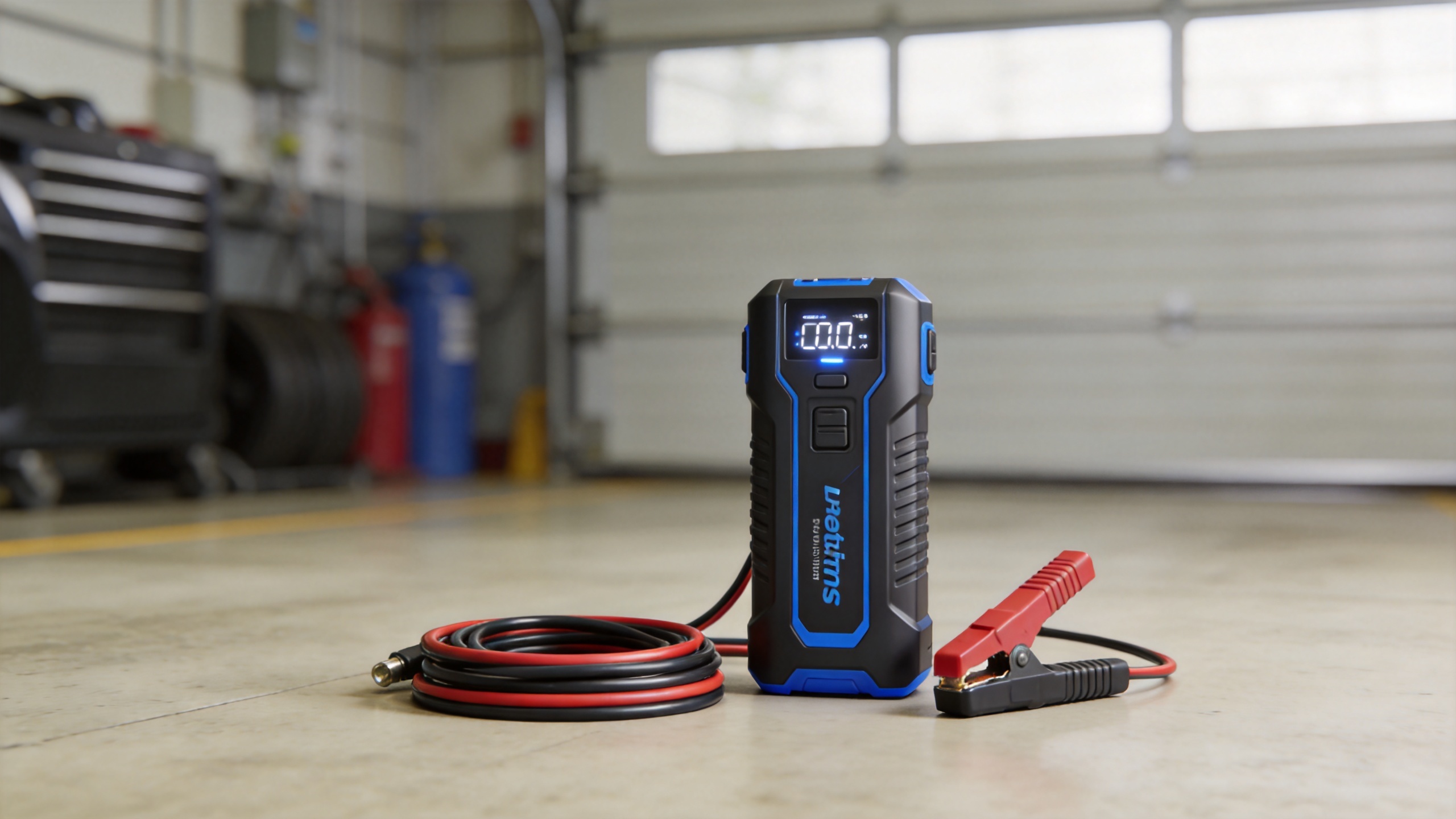
Portable jump starters, by contrast, act as a standalone power source. They contain high-density lithium batteries that discharge a massive burst of energy directly into your starter motor. Because they don’t rely on another vehicle, they eliminate the need for a second driver, making them the superior choice for solo travelers or those who find themselves stranded in remote areas where traffic is sparse.
The Safety Factor: Why Modern Tech Wins
The primary danger with old-school jumper cables is human error. If you accidentally touch the red and black clamps together, or if you connect them to the wrong terminals, you risk a massive short circuit, sparks, and potentially damaging the sensitive electronics of both vehicles. Cables offer no protection against these mistakes; they are essentially "dumb" wires that will pass whatever current is available.
Portable jump starters are designed with safety circuitry that makes them virtually foolproof. Most modern units include:
- Reverse Polarity Protection: The device will not activate if the clamps are connected to the wrong terminals.
- Short-Circuit Protection: If the clamps touch, the unit simply shuts down instead of sparking.
- Over-Charge/Over-Discharge Protection: These units monitor the health of the internal battery to prevent swelling or fires.
- Spark-Proof Technology: Because the unit controls the flow of electricity, you don't get the dangerous "arc" of sparks often seen when clamping traditional cables.
Head-to-Head: Performance in Extreme Conditions
One of the most common criticisms of lithium-based jump starters is their performance in freezing temperatures. It is a scientific reality that lithium batteries struggle to output peak power when they are deeply frozen. If your jump starter has been sitting in your trunk at -20°F, it may need a moment to "warm up" or may not have the punch required for a massive V8 engine.
Jumper cables, being simple copper or aluminum, are indifferent to temperature. They will work as well in the Arctic as they do in the desert, provided the donor vehicle’s battery is functioning. However, the trade-off is that they are useless if the donor battery is also weak or if there is no other vehicle around. For those in extreme climates, the best strategy is to keep your portable jump starter inside the cabin or in a temperature-controlled glove box rather than the trunk.
Pricing: The Long-Term Investment
When comparing the portable jump starter vs jumper cables from a financial perspective, jumper cables are clearly the cheaper upfront purchase. You can pick up a set of basic cables for $20 to $40. They have no shelf life, no batteries to charge, and no electronics to fail. They are a "buy once, keep forever" tool.
Portable jump starters, however, represent a higher initial investment, typically ranging from $60 to $200 depending on the peak amperage and build quality. While this is more expensive, you are paying for:
- Internal Battery Technology: High-quality lithium cells.
- Integrated Features: Many include LED flashlights, USB ports for charging phones, and even air compressors.
- Independence: You aren't paying for the time or cooperation of another driver.
- Longevity: While lithium batteries do degrade over 3–5 years, the utility provided during that window often offsets the cost of a single roadside assistance call.
Who Should Pick Jumper Cables?
Jumper cables remain a staple for a specific type of driver. If you own a fleet of vehicles, work in a garage setting, or are on an extremely tight budget, cables are the most logical choice. They are also ideal for the "set it and forget it" driver—someone who might leave a device in their trunk for three years without ever checking the charge.
- You prioritize simplicity: No charging, no buttons, no firmware.
- You have a reliable second vehicle: If you are jumping a car in your own driveway, cables are perfect.
- You are on a strict budget: They cost a fraction of a power bank.
- You don't want to worry about battery maintenance: Cables don't need to be recharged every few months.
Who Should Pick a Portable Jump Starter?
The portable jump starter is the modern standard for the average daily commuter, the solo traveler, and the urban driver. If you frequently park in garages, travel alone, or want a tool that serves multiple purposes (like charging your phone during a power outage), the jump starter is the clear winner.
- You travel alone: You don't need to rely on the kindness of strangers.
- You want safety features: You aren't confident in your ability to follow complex jump-starting sequences.
- You need multi-functionality: Many units act as power banks for USB devices.
- You drive in areas with low traffic: If you break down on a back road, no one is coming to help you jump your car.
Maintenance and Care
The biggest drawback of a portable jump starter is that it is a battery itself. Just like your smartphone, it requires maintenance. If you leave a jump starter in your car for a year without checking it, you will likely find it dead when you need it most. To ensure reliability:
1. Check the charge every 3–6 months: Most units have an LED indicator showing the current charge level.
2. Store in a moderate environment: Avoid leaving the unit in direct, scorching sunlight or extreme sub-zero temperatures for extended periods.
3. Use the unit occasionally: Even if you don't need to jump a car, use the USB ports to charge a phone or tablet to keep the battery cells active and healthy.
The Verdict: Which is Safer?
When weighing portable jump starter vs jumper cables, the portable jump starter is objectively the safer choice for the average consumer. The combination of reverse polarity protection, spark-proof clamps, and the elimination of the "second vehicle" requirement removes the most common points of failure and danger. While jumper cables are a reliable, low-tech backup, they require a level of mechanical knowledge and situational safety that many drivers simply do not possess.
For peace of mind, investing in a high-quality portable jump starter is one of the smartest upgrades you can make for your vehicle. It transforms a potentially dangerous, stressful roadside event into a simple, five-minute task that you can handle entirely on your own.
Frequently Asked Questions
Can I jump-start a car with a portable jump starter if my battery is totally dead?
Most portable jump starters are designed to provide the initial "cranking" power needed to turn the engine over. If your battery is completely "dead" (as in, it cannot hold a surface charge at all), the jump starter will still work to start the engine, but you must keep the engine running for a while afterward to allow the alternator to recharge the battery.
How many times can I use a jump starter before it needs to be recharged?
This depends on the capacity of the unit and the size of the engine you are starting. Generally, a fully charged jump starter can handle 10 to 20 jump starts before needing a recharge. However, it is best practice to charge the unit after every use to ensure it is ready for the next emergency.
Will a portable jump starter damage my car's computer?
No. In fact, portable jump starters are safer for your car's sensitive electronic control units (ECUs) than jumper cables. Because jump starters provide a clean, regulated surge of power, they are less likely to cause the voltage spikes that can occur when jumping from another car with a running engine.
Do I need to worry about the jump starter catching fire?
High-quality portable jump starters use lithium-polymer or lithium-iron-phosphate (LiFePO4) batteries. These are generally safe. However, you should always buy from reputable brands and avoid "bargain bin" units that lack safety certifications. Never use a jump starter that shows signs of swelling or physical damage.
Are jumper cables ever better than a jump starter?
Yes, in specific scenarios. If you are in a professional shop environment or have a fleet of vehicles, jumper cables are more cost-effective. Additionally, if you live in an area with extreme, prolonged sub-zero temperatures, jumper cables are more reliable because they do not rely on an internal battery that can be affected by the cold.
Conclusion
Deciding between a portable jump starter vs jumper cables is ultimately about choosing between convenience and tradition. While jumper cables are a classic tool that will never fail due to a dead battery, the modern portable jump starter offers a level of safety, independence, and utility that makes it the superior choice for the vast majority of drivers. By prioritizing smart circuitry and self-sufficiency, you can ensure that a dead battery is merely a minor inconvenience rather than a roadside emergency.