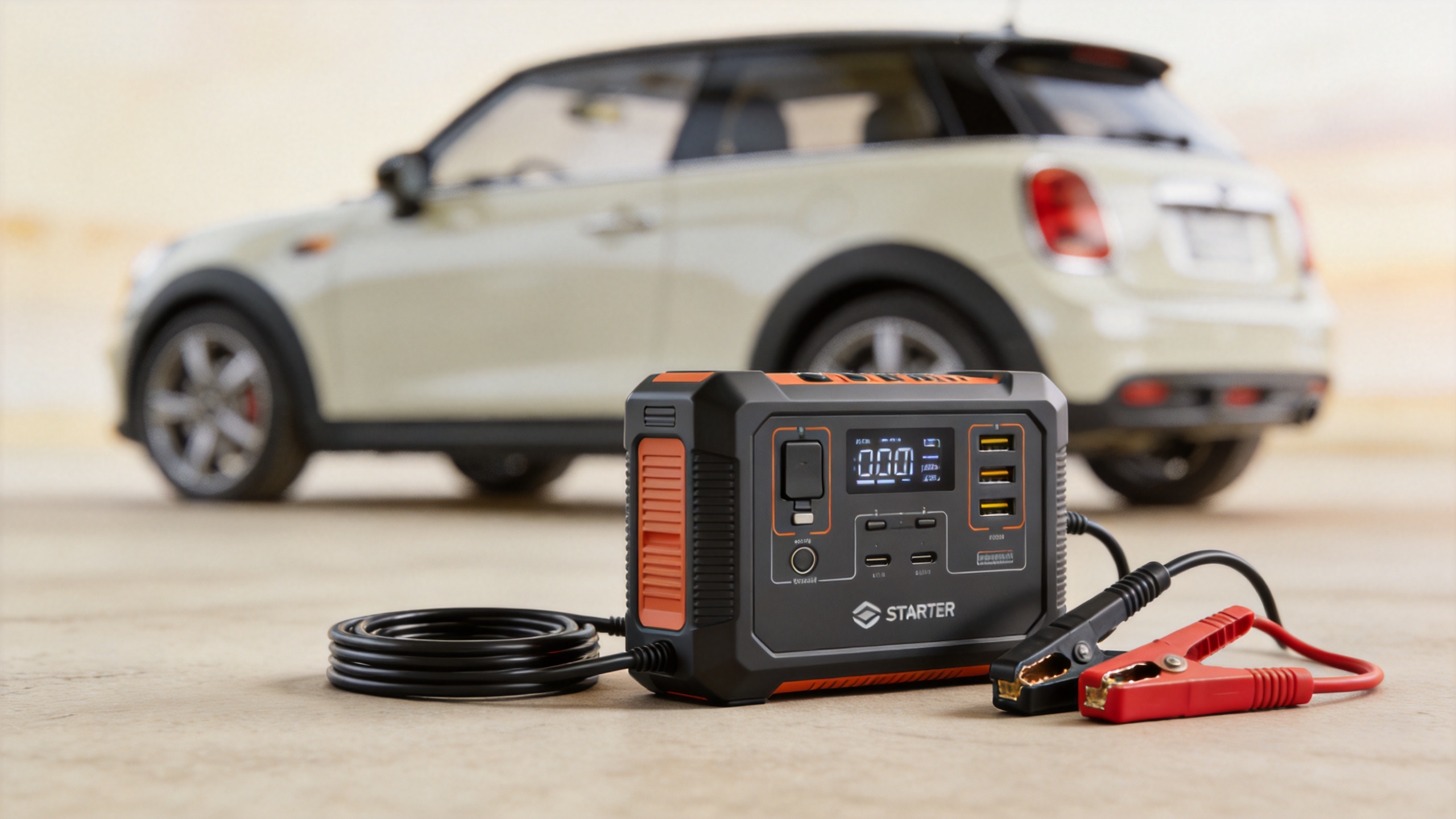
Finding yourself stranded with a dead battery is a stressful experience, but having the right tool in your trunk can turn a potential disaster into a minor inconvenience. When navigating the market for the best portable jump starters for cars, it is essential to balance power, portability, and safety features tailored specifically to compact vehicles and daily-driver sedans.
Best Portable Jump Starters for Compact Cars and Sedans: at a glance
Compact cars and sedans generally have smaller engine displacements, meaning they do not require the massive cranking amps needed for heavy-duty diesel trucks or commercial machinery. Because of this, you can prioritize lightweight, lithium-based units that store easily in a glove box or spare tire well.
- The Entry-Level Choice: The NOCO Boost GB40 is a gold standard for small engines, offering a compact footprint without sacrificing essential safety protections.
- The Power-User Option: For those who want extra overhead, the GOOLOO GP4000 provides significant starting current in a surprisingly portable package.
- The Tech-Forward Upgrade: The NOCO Boost X GBX55 utilizes USB-C charging, making it a modern, fast-charging companion for your daily commute.
- The Value Play: The AstroAI S8 Ultra delivers reliable performance at a price point that makes it an easy addition to any emergency kit.
Understanding Cranking Amps for Small Engines
When evaluating the best portable jump starters for cars, many consumers get distracted by "Peak Amps." While peak power sounds impressive on a box, the most important metric for a compact sedan is how the unit handles the initial surge of current required to turn over the starter motor.
For a standard 4-cylinder or V6 sedan, you rarely need a unit rated for 3000+ amps. Instead, look for a consistent discharge rate. Units like the Primedura DM1264 are engineered to provide a steady flow of energy, which is much kinder to your vehicle’s sensitive onboard electronics than the erratic spikes found in cheaper, unbranded alternatives.
- 4-Cylinder Engines: Usually require 300–500 cold cranking amps.
- V6 Engines: Benefit from 500–800 amps for reliable cold-weather starting.
- Safety Tip: Always ensure the clamp connection is solid; a weak connection wastes the jump starter’s energy as heat rather than sending it to the starter solenoid.
Head-to-head: Lithium vs. Lead-Acid
Historically, jump starters were heavy, lead-acid "bricks" that were difficult to move and required constant maintenance. Today, the shift toward lithium-ion technology has revolutionized the market. However, there are still scenarios where professional-grade lead-acid units remain relevant.
If you are choosing between a lithium unit like the NOCO Boost GB40 and a professional unit like the Clore Automotive JNC660, consider your storage space. Lithium units are small and hold a charge for months, making them perfect for "set it and forget it" trunk storage. Lead-acid units, while bulkier, offer incredible durability and are often preferred by mechanics who jump-start multiple cars per day.
- Lithium Pros: Extremely lightweight, USB charging, compact size.
- Lead-Acid Pros: Massive surge capacity, no fire risk from damaged cells, rugged construction.
- Recommendation: Stick to lithium for your personal sedan; reserve lead-acid for garage use or fleet management.
The Importance of Safety Protections
Modern vehicles are packed with sensitive computers, ECUs, and infotainment systems. A "dumb" jump starter—one that simply outputs raw power regardless of the state of your battery—can potentially fry these expensive components.
When looking for the best portable jump starters for cars, prioritize units with "Smart Clamps." These clamps detect the polarity of the battery, preventing sparks if you accidentally reverse the connections. The NOCO Boost X GBX55 and the GOOLOO GP4000 both feature advanced thermal protection and anti-spark technology, ensuring that even if you are a novice, you can jump-start your car without damaging the vehicle’s electrical system.
- Look for these features:
* Reverse polarity protection.
* Short-circuit protection.
* Over-discharge protection.
* Thermal management (auto-shutoff if the unit gets too hot).
Pricing and Value Analysis
The market for portable jump starters has become highly competitive, which is great news for the consumer. You can generally categorize pricing into three tiers:
1. Budget ($50–$90): Units like the AstroAI S8 Ultra offer basic, reliable performance for occasional use. They are perfect for the average driver who wants peace of mind without a high investment.
2. Mid-Range ($100–$180): This is the "sweet spot" for most sedan owners. Products like the NOCO Boost GB40 or GOOLOO GP4000 offer the best balance of safety, longevity, and build quality.
3. Professional/High-Capacity ($200+): Units like the NOCO Boost X GBX155 or Clore Automotive JNC770R are overkill for a compact car but offer unmatched reliability for those who frequently help others or own multiple vehicles.
Who Should Pick Which
Choosing the right unit depends on your specific vehicle and your lifestyle. If you drive a small commuter car and rarely leave the city, a compact lithium unit is all you need. If you live in an area with extreme winters, you may want to look at the GOOLOO GT4000 Arctic, which is specifically designed to perform in sub-zero temperatures where standard lithium batteries might struggle.
- The Daily Commuter: NOCO Boost GB40 – Small, simple, and safe.
- The Road Tripper: GOOLOO GP4000 – High capacity ensures you can jump your car and charge your phone multiple times.
- The Winter Warrior: GOOLOO GT4000 Arctic – Engineered for extreme cold.
- The Professional/Enthusiast: NOCO Boost Max GB250 – Overkill for a sedan, but the ultimate emergency backup.
Maintenance: Keeping Your Jump Starter Ready
A jump starter is only useful if it is charged. Unlike a standard car battery that is kept topped off by the alternator, a portable jump starter is a standalone device. Lithium units have a low self-discharge rate, but they are not immune to time.
Make it a habit to check your unit every three to six months. If you have a unit with USB-C, like the NOCO Boost X GBX55, charging is fast and convenient. If you leave your jump starter in a hot car during the summer, be aware that excessive heat can degrade the lithium cells over time, shortening the lifespan of the device.
- Pro-Tip: Set a calendar reminder on your phone to check the charge level of your jump starter every time you change your smoke detector batteries or perform your seasonal oil change.
Comparing Advanced Features: USB-C and Beyond
The latest generation of jump starters has moved beyond just "jumping" a car. They now function as high-capacity power banks for laptops, tablets, and smartphones. The NOCO Boost X GBX155 and GOOLOO GP4000 include fast-charging USB ports that can be a lifesaver during power outages or long camping trips.
However, do not let these "extra" features sway your decision away from the core function. A jump starter with a great flashlight but a weak battery is useless when you are stranded. Always prioritize the jump-starting capability first, and treat the power bank features as a secondary bonus.
- Key features to compare:
* Charging time (how long to recharge the jump starter itself).
* Output ports (USB-A vs. USB-C).
* Flashlight brightness (lumens) for night-time emergencies.
* Carry case quality (essential for keeping parts organized).
Frequently Asked Questions
How often should I charge my portable jump starter?
Most manufacturers recommend checking the charge level every 3 to 6 months. Lithium-based units like the NOCO Boost GB40 hold their charge for a long time, but topping them off ensures they are ready for an emergency.
Can I leave my jump starter in the car during winter?
Yes, but be aware that extreme cold can temporarily reduce the output of the battery. If you live in a cold climate, consider bringing the unit inside during the coldest months, or choose a specialized unit like the GOOLOO GT4000 Arctic that is rated for sub-zero performance.
Are these jump starters safe for my car’s computer?
Yes, as long as you use a modern jump starter with built-in safety features like reverse polarity protection and surge suppression. Units like the NOCO Boost X GBX55 are designed specifically to protect sensitive automotive electronics.
What is the difference between Peak Amps and Cranking Amps?
Peak Amps is the maximum current the unit can output for a fraction of a second. Cranking Amps is a more realistic measure of the power the unit can provide to actually start your engine. When looking for the best portable jump starters for cars, focus on the manufacturer's recommended engine size rather than just the peak amp number.
Can I use a jump starter on a hybrid or electric vehicle?
While many jump starters can provide power to the 12V auxiliary battery in a hybrid or electric vehicle, you should always consult your owner's manual. Never attempt to jump-start the high-voltage main drive battery; the jump starter is only for the standard 12V system that powers the lights and electronics.
Verdict
Selecting the best portable jump starters for cars comes down to finding the balance between your vehicle's engine size and your personal comfort level with technology. For the vast majority of compact car and sedan owners, the NOCO Boost GB40 offers the most reliable, easy-to-use experience, while the GOOLOO GP4000 provides excellent value for those wanting extra power. By keeping your unit charged and stored in a cool, dry place, you can ensure that you are never left stranded, regardless of the situation. For more detailed comparisons and expert-tested rankings, you can explore our full list of The Best Portable Jump Starters for 2026.