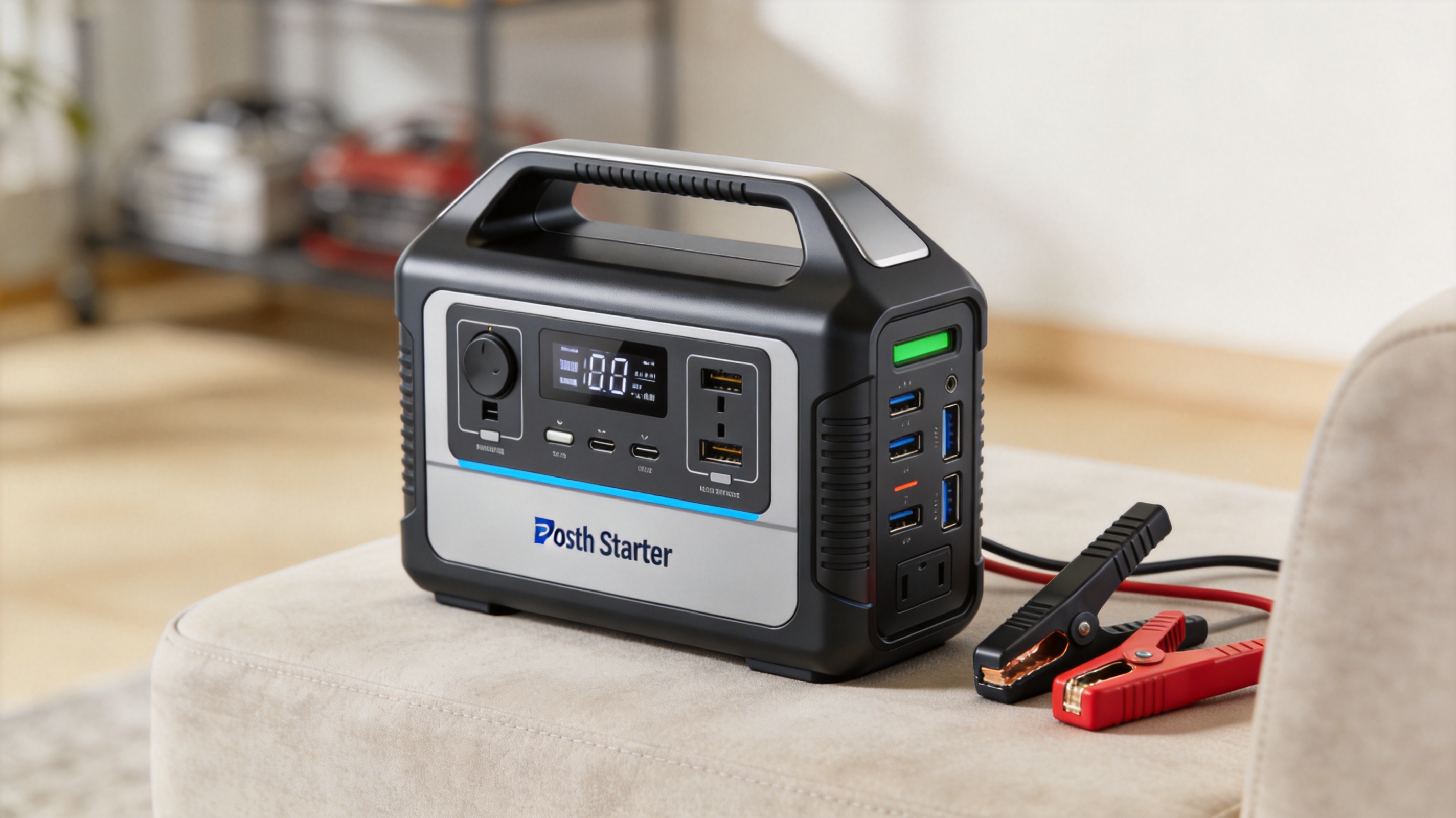
Owning a reliable power pack is an essential part of modern vehicle ownership, but many drivers neglect the care required to keep these lithium-ion or lead-acid powerhouses ready for an emergency. This guide explores the critical maintenance steps, longevity secrets, and technical realities—including the common question of can a portable jump starter charge a battery—to ensure your investment lasts for years.
Portable Jump Starter Maintenance and Longevity Secrets: at a glance
The longevity of your jump starter depends almost entirely on how you store and cycle its internal battery chemistry. Whether you own a high-capacity unit like the NOCO Boost Max GB250 or a compact powerhouse like the AstroAI S8 Ultra, the rules of battery health remain largely consistent. Lithium-ion batteries, which power most modern portable units, are sensitive to extreme temperatures and deep discharge cycles.
To maximize the lifespan of your device, follow these core pillars:
- Temperature Control: Never store your unit in a vehicle during extreme summer heat or freezing winter nights if possible; heat degrades lithium chemistry rapidly.
- The 50% Rule: Store your unit at a 50% to 75% charge level if it will sit for more than three months.
- Periodic Cycling: Even if you haven't used the unit, check the charge level every 3–6 months and top it off to prevent self-discharge.
- Terminal Care: Keep the clamps free of corrosion by wiping them down after every use, especially if you have used them on a leaking or heavily corroded car battery.
Understanding Battery Recovery: Can a portable jump starter charge a battery?
One of the most frequent misconceptions is the functional difference between a "jump starter" and a "battery charger." If you are wondering can a portable jump starter charge a battery, the short answer is no—at least not in the way a dedicated trickle charger or maintainer does. A jump starter is designed to provide a massive, short-duration burst of high amperage to turn over the starter motor.
Once the engine is running, your vehicle's alternator takes over the job of recharging the car's battery. If you leave a jump starter connected to a dead battery, it will not "fill" that battery to 100% capacity; instead, it may actually drain the jump starter’s own internal cells until both are depleted.
- Jump Starter Purpose: Provides high instantaneous current (Cold Cranking Amps) to start an engine.
- Charger Purpose: Provides a low, steady current over several hours to restore chemical capacity to a battery.
- The Risk: Leaving a jump starter connected after the engine starts can cause a back-flow of current that may damage the jump starter’s internal circuitry or safety fuses.
Head-to-Head: Lithium vs. Lead-Acid Longevity
When selecting a unit from our The 8 Best Portable Jump Starters for 2026 list, you will encounter two primary technologies: Lithium-ion (Li-ion) and Sealed Lead-Acid (SLA). Each requires a different approach to maintenance.
The Clore Automotive JNC660 and Clore Automotive JNC770R use lead-acid batteries. These are heavy and bulky but thrive on being kept at a full charge at all times. If you let an SLA battery sit discharged, it will sulfate and die quickly. Conversely, lithium units like the GOOLOO GP4000 are lightweight and have a low self-discharge rate, but they are more susceptible to damage if they are overcharged or exposed to extreme heat.
- Lead-Acid Maintenance: Must be plugged into a wall charger constantly when not in use.
- Lithium Maintenance: Requires periodic "top-offs" but should not be left on a charger indefinitely unless the manufacturer specifically states the unit has a smart-cutoff circuit.
Professional-Grade Durability: NOCO Boost and Beyond
For those who rely on their equipment for work, professional-grade units like the NOCO Boost X GBX155 or the NOCO Boost GB150 are built with ruggedized housings and heavy-duty clamps. These units are designed to withstand the rigors of a shop environment, but they still require attention to the "connection cycle."
Longevity in professional settings is often lost through cable fatigue. Always ensure the cables are stored without sharp kinks and that the clamps are not left dangling where they can short out against metal tools. If you are looking for the absolute best in reliability, check out The 8 Best Professional-Grade Portable Jump Starters of 2026.
- Cable Integrity: Check for frayed insulation or loose connections where the cable meets the unit.
- Clamp Protection: Use the provided carrying case to prevent the clamps from making contact with debris or conductive surfaces.
Pricing and Value: Investing in Longevity
When comparing prices, it is tempting to look for the cheapest option, but longevity is often a function of build quality. A unit like the Primedura DM1264 offers a specific price-to-performance ratio that is ideal for occasional use, whereas the NOCO Boost X GBX55 is priced for those who need high-speed charging and frequent dependability.
If you are on a budget, consider that a cheaper unit that dies after two years is more expensive than a premium unit that lasts for five. Always cross-reference your needs with our The Best Portable Jump Starters for 2026 to see which units offer the best long-term value.
Who Should Pick Which?
Choosing the right unit depends on your vehicle type and usage frequency.
- The Daily Driver: If you have a standard sedan, the NOCO Boost GB40 is compact and easy to maintain.
- The SUV/Truck Owner: For larger engines, the GOOLOO GT4000 Arctic provides the necessary power for cold-weather starts.
- The Professional: If you are working on multiple vehicles daily, the NOCO Boost GB70 or higher models are essential for their durability and high-amperage output.
Always ensure your choice aligns with the engine displacement (liters) of your vehicle. Overloading a small jump starter on a massive diesel engine will lead to premature failure of the internal battery cells.
Storage Secrets: Where to Keep Your Jump Starter
The most common cause of premature death for a jump starter is "trunk storage syndrome." Many people throw their unit in the trunk and forget it for three years. By the time they need it, the internal battery has dropped below the threshold required to wake up the smart-protection circuitry.
- The Glovebox/Center Console: If the unit is compact, this is often a climate-controlled environment compared to the trunk.
- Climate-Controlled Storage: If you live in an area with extreme weather, keep the unit in the house or garage rather than the vehicle.
- The "Checklist" Approach: Create a recurring calendar reminder every three months to pull the unit out, check the charge, and perform a status test.
Troubleshooting: When the Unit Won't Start
If your jump starter fails to initiate a jump, don't immediately assume it's broken. Often, the issue is a safety feature detecting a "dead" battery. Some smart units, like the NOCO Boost X series, have an "override" mode for batteries that are completely flat (below 2 volts).
- Check the connections: Ensure the clamps are biting into clean metal on the battery terminals.
- Check the cables: Ensure the plug-in connector is fully seated in the jump starter unit.
- Check the override: If the battery is deeply discharged, the unit may need to be manually put into "Manual Override" mode to bypass the safety check.
FAQ: Frequently Asked Questions
Can a portable jump starter charge a battery if left connected?
No. As mentioned, a jump starter is designed for a high-amperage burst. Leaving it connected after the car is running can cause damage to the unit’s internal battery and electronics. Once the engine starts, remove the clamps immediately.
How often should I charge my jump starter?
Lithium-ion units should be topped off every 3 to 6 months. Lead-acid units should be kept on a trickle charger whenever they are not in use to prevent sulfation.
Does cold weather affect my jump starter's lifespan?
Yes. Cold weather drastically reduces the chemical reaction speed inside the battery. Always bring your unit inside during sub-zero temperatures to ensure it has the power to start your car when you actually need it.
What does the "smart" in smart-clamp mean?
Smart clamps provide reverse polarity protection and short-circuit protection. They prevent the unit from firing if the clamps are connected to the wrong terminals, which protects both your car's ECU and the jump starter itself.
Can I use a jump starter to power other devices?
Many modern units feature USB ports for charging phones or tablets. While this is a great feature, be mindful that using your jump starter as a power bank will deplete the capacity you need for an emergency jump. Always prioritize the jump-start capacity.
Verdict
Maintaining a portable jump starter is a simple process of temperature management and regular charging cycles. Whether you choose a lead-acid powerhouse like the Clore Automotive JNC770R or a high-tech lithium unit like the NOCO Boost X GBX55, the key to longevity is preventing the battery from sitting in a deep-discharge state. Remember that these devices are emergency tools, not battery chargers, and treating them with proper care will ensure they perform when you are stranded. For a comprehensive look at the top performers, consult The Best Portable Jump Starters for Automotive Tools in 2026 to find the unit that best fits your vehicle and maintenance habits.