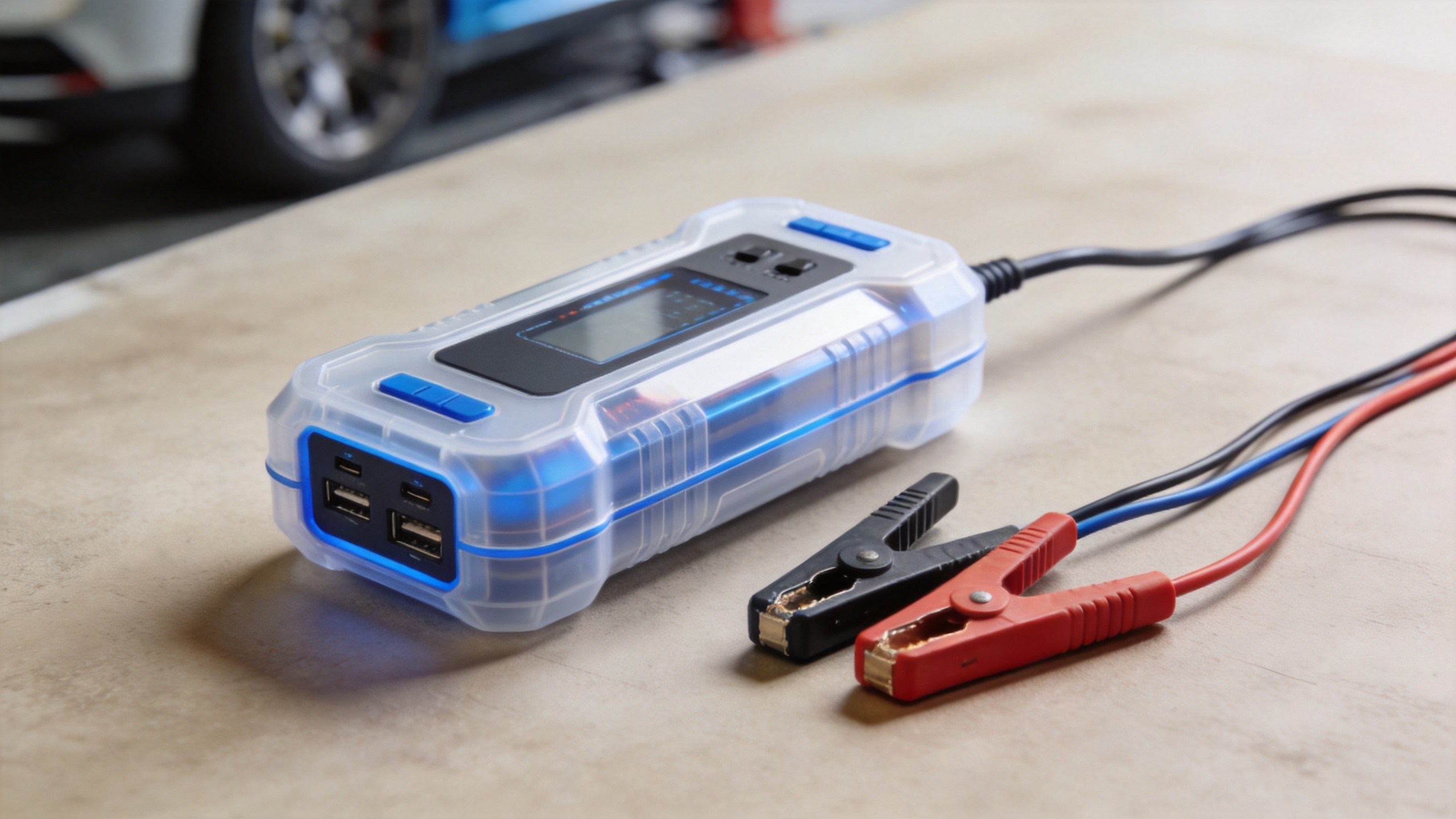
Finding yourself stranded with a dead battery is a universal driver’s nightmare, but it no longer requires waiting hours for a tow truck or begging a stranger for a jump. Modern lithium-ion technology has revolutionized roadside assistance, putting the power to restart your engine in the palm of your hand.
Best Budget Portable Jump Starters Under $100: at a glance
The market for emergency power supplies has shifted significantly over the last few years. You no longer need to spend $200 or more to get a reliable, high-capacity jump starter. The current crop of devices under $100 offers a perfect balance of safety, portability, and raw cranking power. When shopping in this category, you are generally looking for devices that provide at least 1000 to 2000 peak amps, which is sufficient for most standard passenger vehicles, SUVs, and light-duty trucks.
Key features to look for in this price bracket include intelligent clamp systems that prevent sparking or reverse polarity connection, USB charging ports for your mobile devices, and integrated LED flashlights. While these units are "budget" in price, they are not budget in performance. They use high-discharge lithium-polymer batteries that hold a charge for months, making them the ultimate "set it and forget it" tool for your glovebox or trunk.
Understanding Peak vs. Cranking Amps
One of the most confusing aspects of buying a jump starter is the terminology. Manufacturers often highlight "Peak Amps" in large font on the box, but this number can be misleading. Peak amps represent the maximum current the device can deliver for a fraction of a second, which is rarely what your car actually needs to turn over.
Instead, focus on the "Cranking Amps" or the engine size compatibility listed by the manufacturer. A 2000-amp unit might be overkill for a compact sedan, but it provides a safety margin for larger engines or cold-weather starts. When evaluating the best budget portable jump starter for your specific vehicle, consider these factors:
- Engine Displacement: Check if the unit is rated for your engine size (e.g., 6.0L gas vs. 3.0L diesel).
- Battery Chemistry: Ensure the unit is compatible with your specific battery type (Lead-acid, AGM, or Gel).
- Temperature Tolerance: Look for units that explicitly state they can operate in sub-zero conditions.
The Role of Safety Protections
Safety is the single most important factor when dealing with high-capacity lithium batteries. In the past, old-school jump leads were dangerous because they were always "live," meaning if the clamps touched, they would spark. Modern jump starters feature "smart clamps" that detect the voltage of the battery before sending any power.
If you connect the clamps backward (positive to negative), the device will simply refuse to engage. This eliminates the risk of frying your car's sensitive ECU (Engine Control Unit) or causing a fire. When selecting a budget model, ensure it includes the following built-in protections:
- Reverse Polarity Protection: Prevents damage from incorrect clamp placement.
- Short Circuit Protection: Stops the flow of electricity if the clamps touch.
- Overcharge/Over-discharge Protection: Maintains the health of the internal lithium cells.
- Spark-Proof Technology: Ensures no electrical arc occurs during connection.
Head-to-head: NOCO Boost Plus GB40 vs. Gooloo GP4000
When comparing the top contenders, the NOCO Boost Plus GB40 and the Gooloo GP4000 represent two different philosophies in the budget market. The NOCO GB40 is widely considered the gold standard for reliability and build quality. It is incredibly compact, rugged, and features a minimalist design that focuses on doing one thing extremely well: jump-starting.
The Gooloo GP4000, on the other hand, leans into the "power bank" utility. It offers significantly higher peak current ratings and often includes more robust accessories. While the NOCO is built for extreme durability and ease of use, the Gooloo is built for sheer power and versatility.
- NOCO GB40 Pros: Extremely intuitive, legendary reliability, compact form factor.
- Gooloo GP4000 Pros: Higher amp output, better value-per-dollar in terms of raw power, versatile charging outputs.
The Importance of Portability and Design
The best budget portable jump starter is the one you actually have with you when you need it. A jump starter that is too bulky will end up sitting in your garage rather than your vehicle. Most units under $100 are designed to be roughly the size of a large smartphone or a paperback book.
When considering portability, don’t just look at the device—look at the carrying case. A high-quality hard-shell or semi-rigid case is essential. It protects the unit from being crushed by heavy items in your trunk and keeps the cables organized. If a unit comes with a flimsy drawstring bag, you might find yourself losing the specialized smart cables over time.
- Weight: Ideally under 2 lbs for easy handling.
- Cable Length: Ensure the cables are at least 12-15 inches long to allow for easy positioning.
- Housing: Look for rubberized edges or impact-resistant plastic to survive the occasional drop.
Pricing: What to Expect Under $100
Pricing in the jump starter market is volatile. You will often see "list prices" of $150 or more, but these items are almost perpetually on sale or subject to "clip the coupon" discounts on major retail platforms. When we talk about a "budget" device, we are looking for the street price that typically hovers between $60 and $95.
It is important to avoid the "too good to be true" category. If you see a jump starter for $25, it likely uses low-quality battery cells that will degrade within a few months or, worse, pose a safety risk. By sticking to the $60–$100 range, you are paying for quality control, legitimate safety certifications (like UL or CE), and a manufacturer that will actually honor a warranty.
- $60–$80: The "sweet spot" for 1000–1500 amp units.
- $80–$100: The premium budget tier, often featuring 2000+ amps or fast-charging USB ports.
Who Should Pick Which
Choosing the right device depends heavily on your vehicle and your lifestyle. If you drive a standard sedan or a small crossover, you do not need the highest-rated unit on the market. A 1000-amp device like the NOCO GB40 is more than sufficient and offers the peace of mind that comes with a premium brand.
However, if you own a larger vehicle, such as a full-sized truck, a diesel engine, or an SUV with a high-displacement engine, you should gravitate toward the higher-output units like the Gooloo GP4000. These engines require a significant "kick" to get the crankshaft moving, and a smaller unit might struggle in cold weather.
- For the Daily Commuter: Choose a compact, high-reliability unit like the NOCO GB40.
- For the Road Tripper/Adventurer: Choose a high-capacity unit with extra USB ports and a large battery capacity for charging phones and tablets.
- For the Truck/Diesel Owner: Prioritize units with high peak amp ratings (2000A+).
Maintenance and Longevity
Even the best budget portable jump starter requires a little bit of care to ensure it works when the moment of truth arrives. Lithium-ion batteries have a self-discharge rate, meaning they lose a small amount of power over time, even when not in use. You cannot simply throw it in your trunk and forget about it for five years.
Make it a habit to check the charge level of your jump starter every three to six months. Most units have a series of LED lights that indicate the current capacity. If it’s below 75%, plug it in and top it off. This simple maintenance routine will extend the lifespan of the internal battery to 5–7 years or more.
- Temperature Control: Avoid leaving the unit in extreme heat (like a hot car in July) for extended periods, as this degrades lithium cells.
- Cycle Life: Most units are rated for 500–1000 charge cycles, which is more than enough for a lifetime of roadside emergencies.
FAQ: Frequently Asked Questions
Can a portable jump starter damage my car's computer?
No, provided you use a modern unit with "smart clamps." These devices monitor the voltage and only send power once they confirm a safe connection. They are significantly safer than using traditional jumper cables connected to another vehicle, which can cause power surges.
How many times can I jump start my car on one charge?
This depends on the capacity of the unit and the state of your car battery. Generally, a fully charged 2000A jump starter can provide between 15 and 30 jump starts on a single charge. However, it is best practice to recharge the unit after every use.
Will these work in freezing temperatures?
Yes, but with caveats. Lithium batteries lose efficiency in the cold. If you live in a cold climate, look for a unit that specifically mentions "cold start" capability. Additionally, if the unit has been sitting in a freezing car, try to keep it in the cabin or bring it inside to warm up slightly before use if possible.
Can I use these to charge my laptop?
Some higher-end budget units include a 12V DC output or a high-wattage USB-C port that can charge laptops. However, standard jump starters are primarily designed for high-amperage, short-duration output. Check the specs of your specific model to see if it supports Power Delivery (PD) charging for laptops.
Are these units safe to fly with?
Most airlines limit lithium-ion batteries to 100Wh (watt-hours). Most portable jump starters under $100 fall under this limit, but you should always check the label on the back of the device and confirm with your airline's specific policy before heading to the airport.
Verdict
Investing in the best budget portable jump starter is one of the most practical decisions a driver can make. It is an insurance policy that pays for itself the first time you avoid a $100+ tow bill or a two-hour wait on the shoulder of a highway.
For most users, the NOCO Boost Plus GB40 remains the top recommendation due to its balance of size, safety, and brand reliability. If you need more raw power for a larger engine, the Gooloo GP4000 provides an excellent high-performance alternative that still fits comfortably within the sub-$100 budget. By keeping your device charged and accessible, you ensure that a dead battery is a minor inconvenience rather than a major life disruption.