Getting stranded with a dead battery is one of the most frustrating experiences for any driver, but modern technology has made the solution much more compact and accessible. Choosing between traditional lead-acid units and the newer lithium-ion technology is the first step toward ensuring you are never left waiting for a tow truck again.
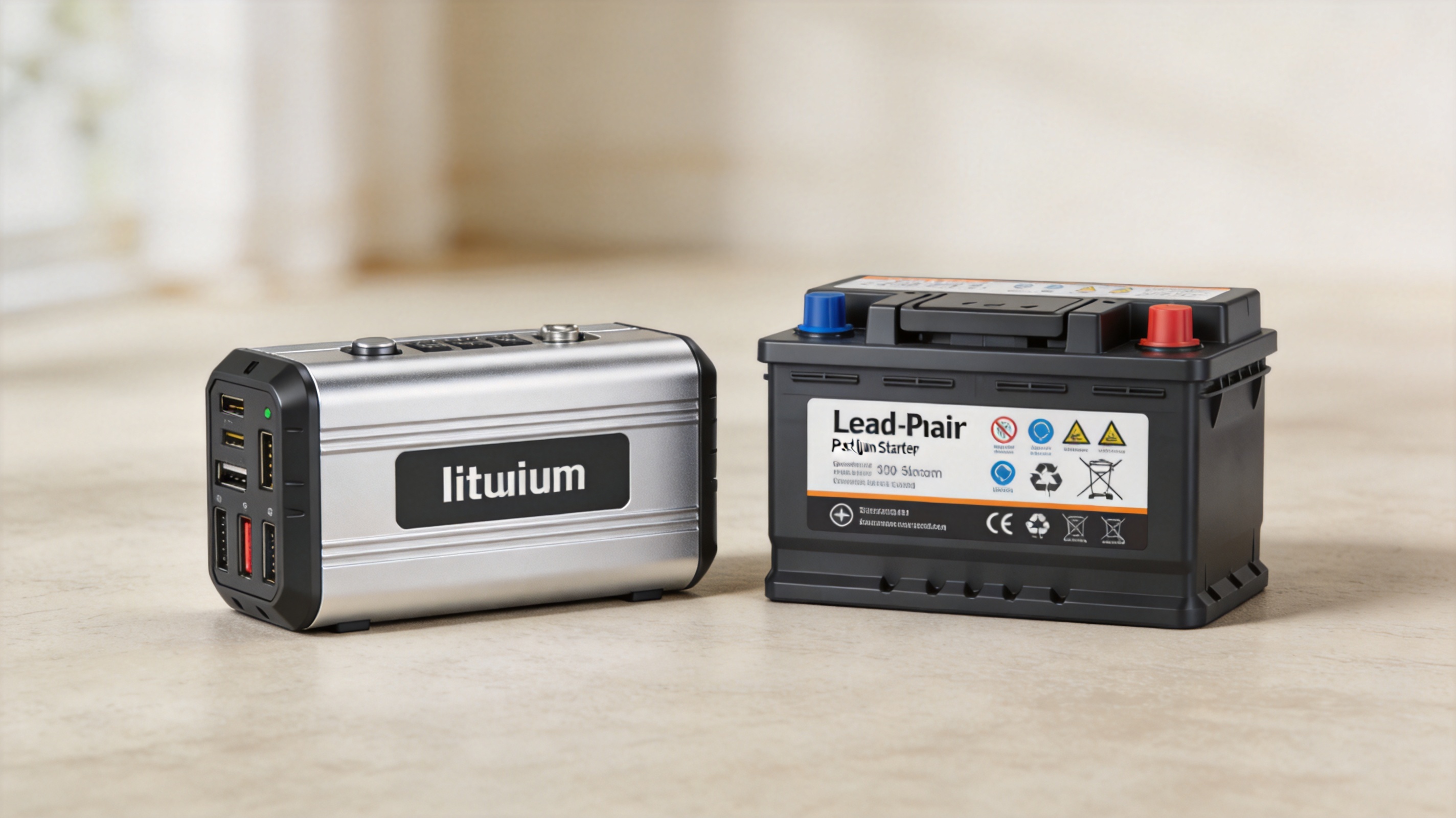
Lithium vs Lead-Acid Jump Starters: At a Glance
When you start browsing through [portable lithium jump starter reviews], you will notice a significant shift in the market toward lithium-ion battery technology. Traditional lead-acid jump starters—often integrated into heavy, bulky "jump packs" with air compressors—rely on older chemistry that is heavy, slow to charge, and prone to self-discharge if left sitting in a trunk for months.
In contrast, lithium jump starters use high-density cells that can deliver massive bursts of current in a package small enough to fit in a glove box or a laptop bag. While lead-acid units still have their place in professional mechanic shops where daily, heavy-duty use is required, the average consumer has almost entirely moved toward lithium for roadside emergencies.
- Lead-Acid: Heavy, bulky, long shelf-life issues, but extremely durable for shop environments.
- Lithium: Lightweight, compact, holds a charge for months, and often features USB ports for charging phones and tablets.
- Maintenance: Lithium requires occasional recharging, while lead-acid units must be kept plugged into a trickle charger to prevent sulfation.
The Evolution of Portable Jump Starter Technology
The shift from the heavy "suitcase-style" jump starters to the modern, handheld lithium power banks is one of the most significant advancements in automotive emergency gear. A decade ago, you needed a 20-pound unit to turn over a V8 engine; today, a device the size of a smartphone can often do the same job. This evolution has been driven by improvements in discharge rates and safety circuitry.
Modern lithium units are not just batteries; they are intelligent devices. They feature "smart clamps" that detect polarity, preventing short circuits if you accidentally touch the terminals together or connect them backward. This level of safety was rarely found in the older, manual lead-acid units, which often lacked sophisticated electronic protection.
- Safety Features: Reverse polarity protection, over-charge protection, and short-circuit prevention.
- Portability: The ability to store the unit in a side door pocket or center console.
- Versatility: Most lithium units now double as power banks for emergency communication devices.
Head-to-Head: Performance and Power
When comparing these two technologies, "cranking amps" is the primary metric. Lead-acid batteries have a high capacity, meaning they can crank an engine for a longer duration if the car is stubborn about starting. Lithium batteries, however, are designed for "burst" power—delivering a massive amount of current for the few seconds required to get the engine spinning.
If you drive a standard passenger vehicle, a high-quality lithium jump starter will almost always outperform a cheap lead-acid unit because of the way lithium handles voltage drop. Lead-acid batteries lose power quickly as the temperature drops, whereas lithium units, when properly designed, maintain their output better in cold weather (though they still have limitations).
- Cranking Duration: Lead-acid is better for "long crank" scenarios (e.g., a flooded engine).
- Cold Weather Performance: Lithium must be kept in the cabin, not the trunk, to maintain peak performance in sub-zero temperatures.
- Power Density: Lithium provides more "oomph" per pound, making it the clear winner for everyday commuters.
Pricing and Value Considerations
Price is often the deciding factor, but it is important to look at the "cost per use" rather than the initial sticker price. Lead-acid jump starters are generally cheaper upfront, but they have a shorter service life. If you don't keep them plugged into a wall outlet at all times, the battery will likely degrade within two to three years, requiring you to replace the entire unit.
Lithium jump starters carry a higher initial price tag due to the cost of the cells and the integrated safety electronics. However, because they hold their charge for 6–12 months without needing a top-up, they are much more reliable for the "set it and forget it" driver. You are paying for the convenience of knowing that when you pull it out after six months of sitting, it will actually work.
- Lead-Acid: Lower entry cost, higher maintenance cost (replacement frequency).
- Lithium: Higher entry cost, lower maintenance effort, longer lifespan if cared for properly.
- Added Value: Look for models that include LED flashlights, USB-C fast charging, and specialized carry cases.
Who Should Pick Which?
The decision between these two technologies usually comes down to your vehicle type and your storage habits. If you are a professional mechanic or someone who works on classic cars with massive, high-compression engines that require long, sustained cranking, a lead-acid jump starter is still the industry standard. They are robust, can take a beating in a shop environment, and are easy to service.
For the vast majority of drivers—including parents, commuters, and road-trippers—the lithium jump starter is the superior choice. If you want something that lives in your glove box and guarantees you can start your car without needing to drag a heavy box out of the trunk, lithium is the only way to go. It is also the better choice for those who value multi-functionality, as many lithium units serve as high-capacity power banks for laptops and smartphones.
- Choose Lithium if: You drive a standard car or SUV, value space, want a multi-purpose tool, and want something that doesn't need constant charging.
- Choose Lead-Acid if: You are a professional, you own a fleet of heavy-duty trucks, or you have a vehicle with a massive engine that requires extended cranking time.
The Importance of Safety Circuits
One of the most critical aspects of [portable lithium jump starter reviews] is the focus on safety. Because lithium batteries are energy-dense, they can be dangerous if they short out. This is why you should never buy a "no-name" lithium jump starter that lacks a dedicated smart-clamp system.
The smart clamps act as a gatekeeper between the jump starter and your car's battery. They monitor the voltage of your car's battery before allowing the jump starter to release its power. If the battery is too damaged or if there is a connection error, the unit will simply refuse to activate, protecting both your car's sensitive ECU and the jump starter itself.
- Spark-Proof Technology: Essential for preventing accidental ignitions near a potentially leaking battery.
- LED Indicators: Most modern units have lights that tell you if the connection is correct (Green) or wrong (Red).
- Automatic Shut-off: Prevents the unit from over-discharging after the engine starts.
Maintenance and Longevity
The death of most jump starters is neglect. Lead-acid units die because they are left in a discharged state, which leads to sulfation—a process where lead sulfate crystals harden on the plates, permanently reducing capacity. If you own a lead-acid unit, you must check it monthly and keep it on a charger.
Lithium units are far more forgiving, but they are not immortal. To maximize the life of a lithium jump starter, try to keep it charged to at least 50% capacity. Avoid leaving it in extreme heat (like a car parked in direct sunlight during summer) for extended periods, as heat is the primary enemy of lithium-ion chemistry. If you follow these simple rules, a quality lithium unit can easily last 500 to 1,000 charge cycles.
- Storage Tip: Store in the cabin, not the trunk, to avoid temperature extremes.
- Check-up: Charge your lithium unit every 6 months to ensure it stays "topped off."
- Avoid: Leaving the unit plugged into a wall charger indefinitely, as this can degrade the cells over time.
Cold Weather Performance Explained
One of the most common complaints in [portable lithium jump starter reviews] involves cold weather performance. It is a scientific fact that chemical reactions slow down in the cold. When the temperature drops below freezing, the internal resistance of a lithium battery increases, which reduces the amount of current it can provide.
To combat this, many high-end manufacturers have started including "pre-heat" technology or simply recommending that you warm the unit up before use. If your car won't start on a cold morning, keep your lithium jump starter in your jacket pocket for a few minutes before connecting it. The heat from your body is often enough to bring the lithium cells into their optimal operating temperature range, allowing for a successful jump.
- The "Pocket Trick": Keep the unit warm before attempting a jump in sub-zero conditions.
- Capacity Buffer: Always buy a unit with more cranking amps than your engine technically requires to account for cold-weather performance drops.
- Insulation: Some premium kits come with insulated pouches to help retain internal heat.
FAQ: Frequently Asked Questions
Can I leave a lithium jump starter in my car year-round?
Yes, but with caveats. While they are designed to handle a wide range of temperatures, extreme heat (above 140°F) can shorten the lifespan of the battery. If you live in a hot climate, try to store the unit under a seat or in a shaded area rather than in direct sunlight on the dashboard.
Will a jump starter damage my car’s computer?
Not if you use a modern unit with smart clamps. The smart-clamp system ensures that the voltage is delivered safely and that there are no surges or reverse polarity issues that could fry your vehicle's sensitive ECU or infotainment system.
How do I know which size jump starter I need?
Consult your vehicle owner's manual to see the "Cold Cranking Amps" (CCA) requirement for your battery. Generally, a 1000-amp jump starter is sufficient for most 4-cylinder and 6-cylinder engines, while V8s and diesel engines usually require 2000+ amps.
Can I use my jump starter to charge my phone?
Absolutely. Most lithium jump starters are essentially high-capacity power banks. They come with USB-A or USB-C ports, making them incredibly useful for camping trips or during power outages, even if you never have to jump-start a car.
How many times can I jump-start a car on a single charge?
It depends on the capacity of the unit and the state of your car battery. A high-quality lithium unit can typically provide 10 to 20 jump starts on a single full charge. However, once the jump starter's own battery drops below 20-30%, it is best to recharge it before attempting another start.
Verdict
The shift toward lithium-ion technology has made the portable jump starter an essential piece of everyday carry gear. While lead-acid units remain a niche tool for heavy-duty, professional environments, the portability, safety, and multi-functionality of lithium units make them the clear winner for the average driver.
When you read through [portable lithium jump starter reviews], prioritize units that offer smart-clamp safety features and a capacity that exceeds your engine's specific cranking requirements. By keeping your unit charged and stored in a temperature-stable environment, you can ensure that you are always prepared for the unexpected, turning a potentially dangerous roadside situation into a simple five-minute fix.