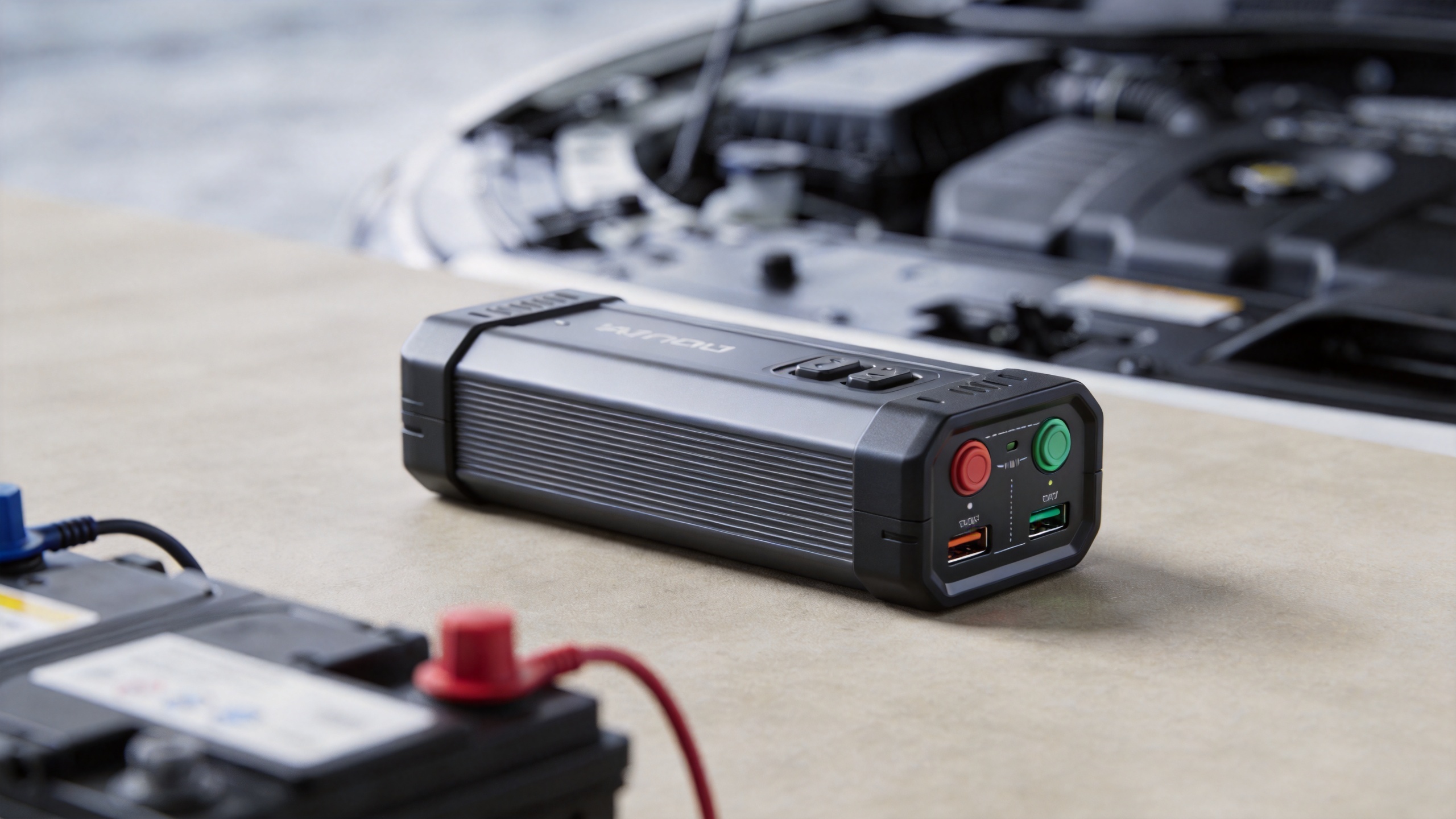
Finding yourself stranded with a dead battery is a universal driver’s nightmare, but modern technology has rendered the bulky, heavy jumper cables of the past obsolete. Finding the best portable jump starter for car battery health and emergency preparedness is now a matter of matching your vehicle's engine size with the right lithium-ion capacity and safety features.
Selecting the Right Jump Starter for Your Vehicle Type: at a glance
When choosing a portable jump starter, the most critical factor is the "cranking amps" (CA) or "peak amps" the unit can deliver. A small sedan with a 2.0L engine requires significantly less power than a diesel-powered heavy-duty truck. Most modern portable units use lithium-ion batteries, which are lightweight, hold a charge for months, and provide a massive burst of energy in a compact form factor.
Beyond raw power, you must consider the "Engine Displacement Compatibility." Manufacturers typically list the maximum engine size the unit can handle for both gas and diesel engines. If you drive a V8 truck or a diesel engine, you cannot simply buy the smallest, cheapest unit on the shelf; you need a device with higher peak current to overcome the initial resistance of a cold, large-displacement engine.
- Gas Engines: Generally easier to start; a 1000A to 1500A unit is sufficient for most 4-cylinder and 6-cylinder cars.
- Diesel Engines: Require higher cold-cranking amps; look for units rated at 2000A or higher.
- Battery Chemistry: Always prioritize Lithium-Ion (LiFePO4 or Li-Po) for the best power-to-weight ratio.
- Safety Features: Never buy a unit without reverse-polarity protection and spark-proof technology.
Understanding Peak Amps vs. Starting Amps
It is common to see marketing materials highlight "Peak Amps," but this can be a misleading metric. Peak amps represent the maximum current the unit can theoretically output for a fraction of a second in a laboratory setting. A more practical metric is "Starting Amps" or "Cranking Amps," which represents the sustained power the unit provides for the few seconds it takes to turn the engine over.
When shopping, look for the manufacturer’s specific engine size recommendations rather than just the "Peak Amps" number printed on the box. A unit advertised as "2000A" might be perfectly fine for a 5.0L gas engine but struggle with a 3.0L diesel engine due to the compression ratios involved.
- Peak Amps: Good for comparing relative capacity, but don't treat it as a guarantee of performance.
- Sustained Current: The actual ability of the unit to turn the starter motor.
- Compression Ratio: Higher ratios (common in diesels) require more "oomph" to get the pistons moving.
Safety Features: The Non-Negotiables
Modern jump starters are far safer than traditional cables, but they still handle high electrical currents. You should never purchase a unit that lacks an intelligent clamp system. These clamps are "smart" because they communicate with the battery before releasing any power.
If you accidentally connect the positive clamp to the negative terminal (reverse polarity), a quality unit will sound an alarm and refuse to send power, protecting your vehicle's sensitive ECU (Electronic Control Unit). Additionally, look for short-circuit protection, which prevents the unit from firing if the metal clamps touch each other while connected to the battery.
- Reverse Polarity Protection: Prevents damage if you hook it up backwards.
- Spark-Proof Technology: Essential for preventing accidental ignitions if there are gas fumes present.
- Over-Voltage/Over-Current Protection: Keeps the unit from frying itself or your car’s electronics.
Head-to-head: Comparing Top Tier Options
When evaluating the market, we look at several standout performers that represent the current industry standards. While specific models evolve, the following categories define the performance tiers available today.
The Compact Daily Driver
These units are designed for small to mid-sized cars. They are usually small enough to fit in a glove box or a door pocket. They are perfect for commuters who want peace of mind without taking up trunk space.
The Heavy-Duty Workhorse
These units are built for trucks, SUVs, and diesel engines. They are physically larger, often featuring heavy-duty copper clamps and larger battery capacities. They often double as portable power banks for charging laptops or running 12V appliances.
The Professional/Emergency Grade
These are the units used by roadside assistance providers. They often feature higher-grade materials, faster recharge times, and sometimes even built-in air compressors for inflating flat tires.
Pricing: What to Expect
The price of a jump starter is usually tied to its battery capacity (measured in milliamp-hours, or mAh) and the peak amperage it can output. You can find entry-level units for under $50, but these are often limited to small gas engines and lack long-term durability.
Mid-range units, typically priced between $80 and $150, offer the best value for the average consumer. These units usually provide 1500A to 2000A of power, include USB charging ports for phones, and come with reliable safety features. If you are paying over $200, you are generally paying for extra features like a built-in air compressor, significantly higher capacity for multiple jumps, or industrial-grade housing.
- Under $60: Basic, limited capacity, light-duty use.
- $80–$150: The "Sweet Spot" for most passenger vehicles.
- $200+: Professional use, multi-functionality (compressors, heavy-duty build).
Who Should Pick Which
Your choice should be dictated by your vehicle, not your budget. If you drive a large SUV, buying a $50 ultra-compact starter is a waste of money because it will likely lack the current to turn your engine over.
- The Commuter: If you drive a standard sedan, focus on portability. A compact 1000A unit is plenty.
- The Weekend Adventurer: If you have an SUV or truck and spend time off-grid, look for a unit with high capacity and extra features like a high-lumen flashlight and USB-C power delivery.
- The Diesel Owner: You must prioritize high peak amps. Do not settle for anything less than a unit specifically rated for diesel engines.
- The Road-Tripper: Consider a unit with a built-in air compressor. Being able to jump your car and inflate a tire with one device is a massive advantage in remote areas.
Battery Maintenance and Longevity
Even the best portable jump starter for car battery maintenance requires a little care. Lithium-ion batteries degrade if left completely dead for long periods. You should aim to top off the charge of your jump starter at least once every three to six months, even if you haven't used it.
Keep the unit in a temperature-controlled environment if possible. Storing a lithium battery in a hot car during the summer or a freezing trunk in the winter can degrade its capacity over time. Most units include a status light or a display that shows the current charge level; treat it like your phone or laptop.
- Quarterly Charging: Keep it topped off every 3 months.
- Temperature Control: Avoid extreme heat; it is the enemy of lithium-ion longevity.
- Cable Care: Keep the clamps clean and free of corrosion to ensure a good connection.
The Role of Multi-Functionality
Modern jump starters have evolved into "Power Stations." Many now include high-speed USB-C ports (Power Delivery), which can charge modern laptops, tablets, and smartphones. This makes them significantly more useful than a single-use tool.
When evaluating these "extra" features, consider how you will use the device when you aren't jumping a car. If you camp or travel frequently, a unit that can charge your laptop is worth the extra weight. However, if you are strictly looking for emergency backup, don't let fancy features distract you from the primary goal: starting the engine.
- USB-C PD: Essential for charging modern electronics quickly.
- LED Flashlights: Look for units with SOS or strobe modes for roadside safety.
- Air Compressors: A great "all-in-one" for emergency kits.
Verdict
The "best" unit is the one that is charged and ready when you need it. Regardless of the brand, the most important step is choosing a unit that exceeds the requirements of your specific engine. Once you have purchased a reliable unit, make it a habit to check the charge level every time you change your car's oil or perform seasonal maintenance.
Avoid the temptation to buy the absolute cheapest unit available, as these often fail when you need them most. Invest in a reputable brand with documented safety features, ensure it matches your engine's displacement, and keep it stored in a cool, accessible place. With the right tool in your trunk, a dead battery becomes a minor inconvenience rather than a major emergency.
***
Frequently Asked Questions
Will a portable jump starter work on a completely dead battery?
Yes, most modern jump starters are designed to handle deeply discharged batteries. However, if your battery is physically damaged (swollen or leaking), you should not attempt to jump it; replace the battery instead.
How many times can I jump a car on a single charge?
It depends on the capacity of the unit and the size of your engine. A high-quality jump starter can typically perform 10–20 jumps on a single charge, but always recharge it after use to ensure it is ready for the next time.
Can I leave my jump starter in the car during winter?
While most units are rated for cold temperatures, their efficiency drops significantly in freezing conditions. If possible, bring the unit inside during extreme cold snaps to ensure it has maximum power when you need it.
Do I need to turn off my headlights and accessories before jumping?
Yes, it is best practice to turn off all electrical loads (headlights, AC, radio) before connecting the jump starter. This ensures that all the power from the jump starter is directed toward the starter motor.
How long does a portable jump starter last?
With proper care (quarterly charging and avoiding extreme heat), a high-quality lithium jump starter can last 3 to 5 years. Over time, the internal battery will naturally lose its ability to hold a charge, similar to a smartphone battery.
Is it safe to use a jump starter on a car with a sensitive computer system?
Yes, provided you use a unit with "smart" clamps. These clamps prevent power surges and protect the vehicle's ECU from voltage spikes, making them much safer than traditional jumper cables connected to another running vehicle.
***
Selecting the right equipment for your vehicle is the most proactive step you can take to avoid being stranded. By focusing on engine compatibility, safety certifications, and proper maintenance, you can ensure that you have a reliable solution for any roadside emergency. Always prioritize quality and reliability over the lowest price point to ensure your jump starter is ready when you need it most.