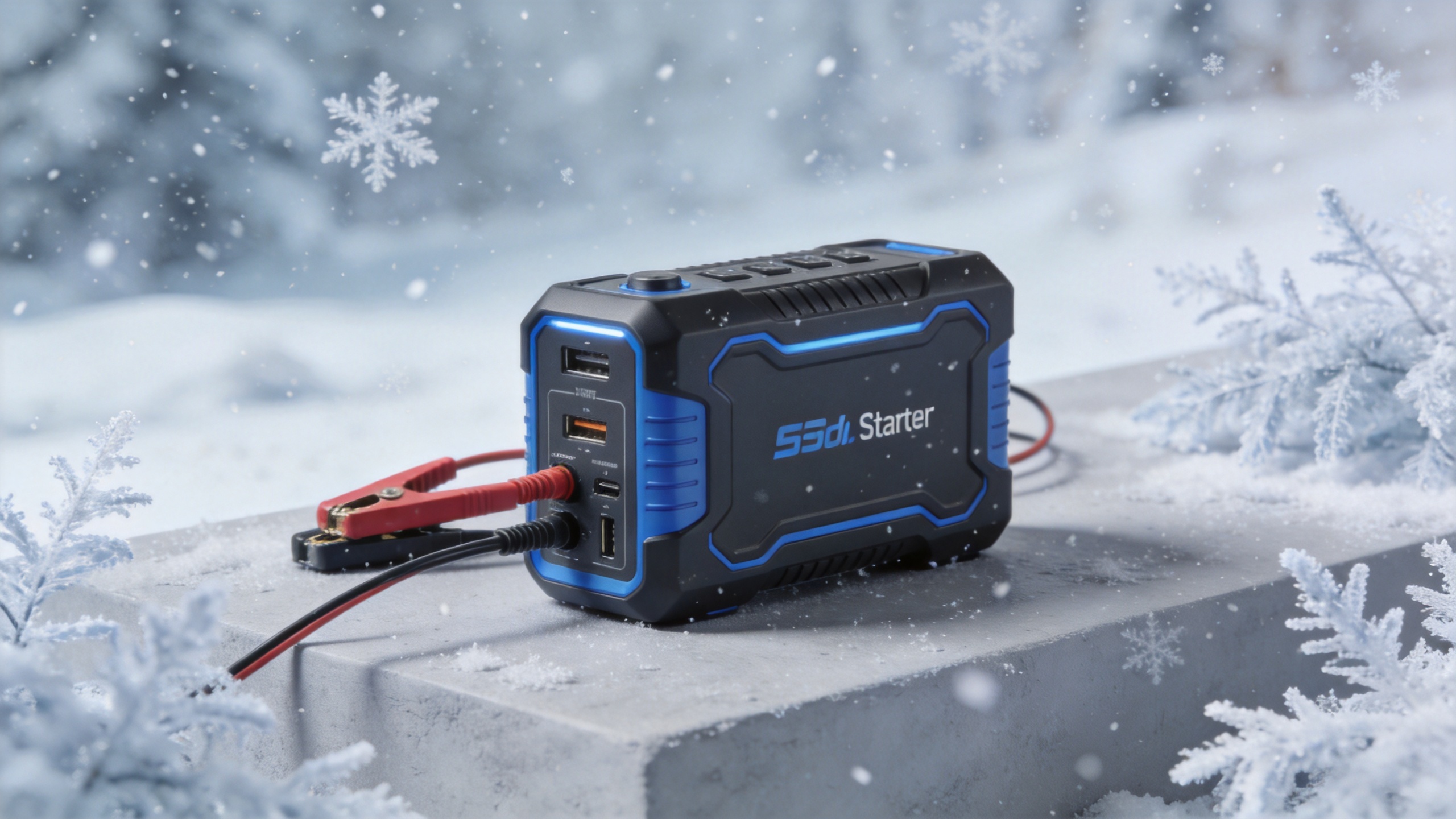
Storing a portable jump starter correctly is the single most important factor in ensuring it performs when you are stranded in freezing temperatures. By following proper maintenance and storage protocols, you can significantly extend the lifespan of your unit and guarantee that you have the best jump starter for extreme cold ready to go when you need it most.
Why this matters
Lithium-ion batteries—the power source for most modern jump starters—are notoriously sensitive to temperature fluctuations. When a battery is subjected to extreme cold, its internal resistance increases, which drastically reduces its ability to discharge current quickly. If you leave your unit in a frozen trunk for weeks, the chemical reaction inside the battery slows down, potentially leaving you with a "dead" jump starter right when your vehicle battery fails.
Beyond simple performance, improper storage can lead to permanent degradation. Storing a lithium-ion battery at a low state of charge in freezing conditions can cause the electrolyte to become unstable, leading to a loss of capacity that is irreversible. Investing in high-quality gear like the GOOLOO GT4000 Arctic is a great start, but even the most robust units require a climate-aware storage strategy to maintain their peak cranking amps.
- Prevents Capacity Loss: Consistent temperature management stops the permanent chemical degradation of battery cells.
- Ensures Readiness: A properly stored unit remains at a high voltage, ensuring it can provide the massive "in-rush" current needed to turn over a cold engine.
- Safety: Extreme cold followed by rapid internal heating (during a jump attempt) can stress battery casings if the unit has been neglected.
What you will need
To properly manage your jump starter, you do not need a specialized garage, but you do need a few basic supplies to keep the unit in optimal condition. The goal is to create a storage environment that minimizes exposure to sub-zero temperatures and ensures the unit is always topped off.
- An Insulated Carry Case: Most units, such as the AstroAI S8 Ultra, come with a case. If yours didn't, a small, insulated lunch bag can act as a thermal buffer in your trunk.
- A Portable Power Bank/Charger: Keep a USB-C or DC charging cable in your vehicle at all times so you can top off the unit during long drives.
- A Storage Location: Identify a spot inside the cabin rather than the trunk. The area under the passenger seat or behind the driver’s seat is usually warmer and more accessible.
- Battery Maintenance Log: A simple note on your phone to remind you to check the charge level every 3-4 months.
Step by step
Properly storing your jump starter involves a mix of physical placement and periodic maintenance. By following these three steps, you ensure that even a heavy-duty unit like the NOCO Boost Max GB250 remains functional throughout the winter season.
Step 1: Optimize the Storage Location
Never store your jump starter in an unheated trunk or an exposed truck bed during winter. The metal of the vehicle body acts as a heat sink, pulling warmth away from the unit. Instead, store the unit inside the vehicle’s cabin. The interior of the car is better insulated, and if you have been driving, the residual heat from the heater will keep the battery chemistry within a safer operating range.
Step 2: Maintain the State of Charge
A fully charged battery is more resistant to freezing than a partially discharged one. Because the electrolyte in a full battery is denser, it has a lower freezing point. Make it a habit to check the LED indicators on your NOCO Boost X GBX55 or similar devices every time you perform a seasonal tire pressure check. If the charge drops below 75%, bring it inside your home to charge it to 100% using a wall outlet.
Step 3: Use Thermal Buffering
If you absolutely must keep the unit in a colder part of the vehicle, use a thermal buffer. Wrap the device in a wool blanket or place it inside an insulated cooler bag. This won't keep the unit at room temperature indefinitely, but it will slow the rate at which the unit loses heat, ensuring that when you arrive at your destination, the jump starter is closer to its optimal operating temperature.
Common pitfalls
Many users believe that because a device is marketed as "rugged," it is invincible. This is a dangerous assumption that often leads to failure at the worst possible moment.
- Leaving it in the Trunk: The trunk is the coldest part of any vehicle. Avoid this at all costs.
- Ignoring the "Low Battery" Warning: If your NOCO Boost GB40 shows a low-battery light, do not wait until you have a dead car battery to charge it. A low-charge lithium battery is significantly more likely to be damaged by freezing temperatures than one at full capacity.
- Storing in Direct Sunlight: While cold is the enemy, extreme heat from direct sunlight on a dashboard can also damage the internal battery management system (BMS). Keep the unit tucked away in a shaded compartment.
- Using Cheap Charging Cables: Ensure you are using the manufacturer-provided cable or a high-quality equivalent. Using a frayed or low-gauge cable can lead to improper charging, which might leave the unit under-powered even if the lights suggest it is full.
Selecting the right tool for the job
If you live in a region where temperatures regularly dip below zero, you need a unit specifically engineered for the cold. Products like the GOOLOO GT4000 Arctic are designed with internal heating or specialized battery chemistry that handles cold starts better than standard consumer-grade jump starters.
When comparing options, look for "Cold Cranking Amps" (CCA) ratings rather than just "Peak Amps." Peak amps are often marketing fluff, whereas the ability to deliver high current in freezing temperatures is a technical requirement. For larger vehicles, the NOCO Boost X GBX155 provides the necessary overhead to overcome the increased friction of cold engine oil.
- Small/Mid-size Sedans: NOCO Boost GB70 is often sufficient.
- Full-size Trucks/SUVs: NOCO Boost Max GB250 or NOCO Boost GB150 are preferred.
- Professional/Shop Use: Clore Automotive JNC770R or Clore Automotive JNC660 are the industry standards for reliable, high-output cold starting.
- Emergency Kits: Primedura DM1264 offers a balance of portability and power.
The role of battery chemistry
It is important to understand that not all jump starters are the same. Lead-acid jump starters, like the Clore Automotive JNC660, behave differently in the cold than lithium-ion units. Lead-acid batteries are heavy and bulky, but they are often more resilient to extreme temperature swings. However, they require more frequent maintenance (charging) to prevent sulfation.
Conversely, lithium jump starters like the GOOLOO GP4000 are lightweight and hold a charge for months, but they require the storage precautions mentioned above. If you choose a lithium unit, prioritize those with robust internal protection circuits that prevent the unit from attempting to jump a vehicle if the battery temperature is too low to safely discharge.
Managing the "Cold Start" sequence
When you finally need to use your device, the sequence of operations matters as much as the storage. If you pull your unit out of a cold car, do not immediately try to crank the engine for 30 seconds.
1. Connect the clamps: Ensure a solid connection to the vehicle terminals.
2. Wait 30 seconds: Allow the jump starter to "wake up" and send a small current to the dead battery. This can sometimes warm the internal chemistry of the vehicle battery slightly.
3. Crank in short bursts: Do not hold the ignition for more than 5 seconds. If it doesn't start, wait a minute to let the jump starter recover.
Comparing professional vs. consumer units
For those who live in extreme climates, professional-grade gear is often a better investment. A unit like the Clore Automotive JNC770R is designed for daily use in sub-zero shop environments. While it is less portable than a pocket-sized unit, its reliability in the cold is unmatched. If you are choosing between a compact unit like the NOCO Boost GB40 and a pro unit, consider your vehicle size and how often you face extreme winter conditions.
FAQ
Does the cold permanently damage my jump starter?
It can. If a lithium-ion battery is stored at a low state of charge in freezing temperatures, the internal chemistry can be damaged, leading to a permanent reduction in capacity. Always keep your unit fully charged during winter months to mitigate this risk.
Is it better to bring the jump starter inside the house?
Yes. If you know a deep freeze is coming, bringing your jump starter inside is the single best way to ensure it works. Lithium batteries perform best when stored at room temperature. Even bringing it inside for the night before a cold morning can make a significant difference.
Can I charge my jump starter while it is freezing cold?
No. Never attempt to charge a lithium-ion jump starter while it is below freezing. Charging a frozen battery can cause internal short-circuiting and permanent damage. Always bring the unit into a warm environment and let it reach room temperature before plugging it into a charger.
How often should I check the charge level in winter?
In the winter, check your jump starter's charge level every 30 days. Because cold temperatures can cause the battery to self-discharge faster than in summer, a monthly check ensures you aren't caught off guard.
Which jump starter is best for extreme cold?
For extreme cold, look for units with high cold-cranking output and specialized battery management systems. The GOOLOO GT4000 Arctic is specifically marketed for these conditions, while the NOCO Boost X GBX155 is a powerhouse that excels in high-demand scenarios. Check out The Best Portable Jump Starters for 2026: Expert Tested for a full breakdown of how these units compare under pressure.
Conclusion
Properly storing your jump starter is about more than just convenience; it is a critical safety measure for winter driving. By keeping your device in a temperature-controlled environment, maintaining a full charge, and choosing a high-quality unit like the GOOLOO GT4000 Arctic or NOCO Boost X GBX55, you can ensure that you are never left stranded in the cold. For more information on finding the right gear for your specific vehicle, refer to The Best Portable Jump Starters for 2026 to see which models have earned the highest marks for reliability and performance.