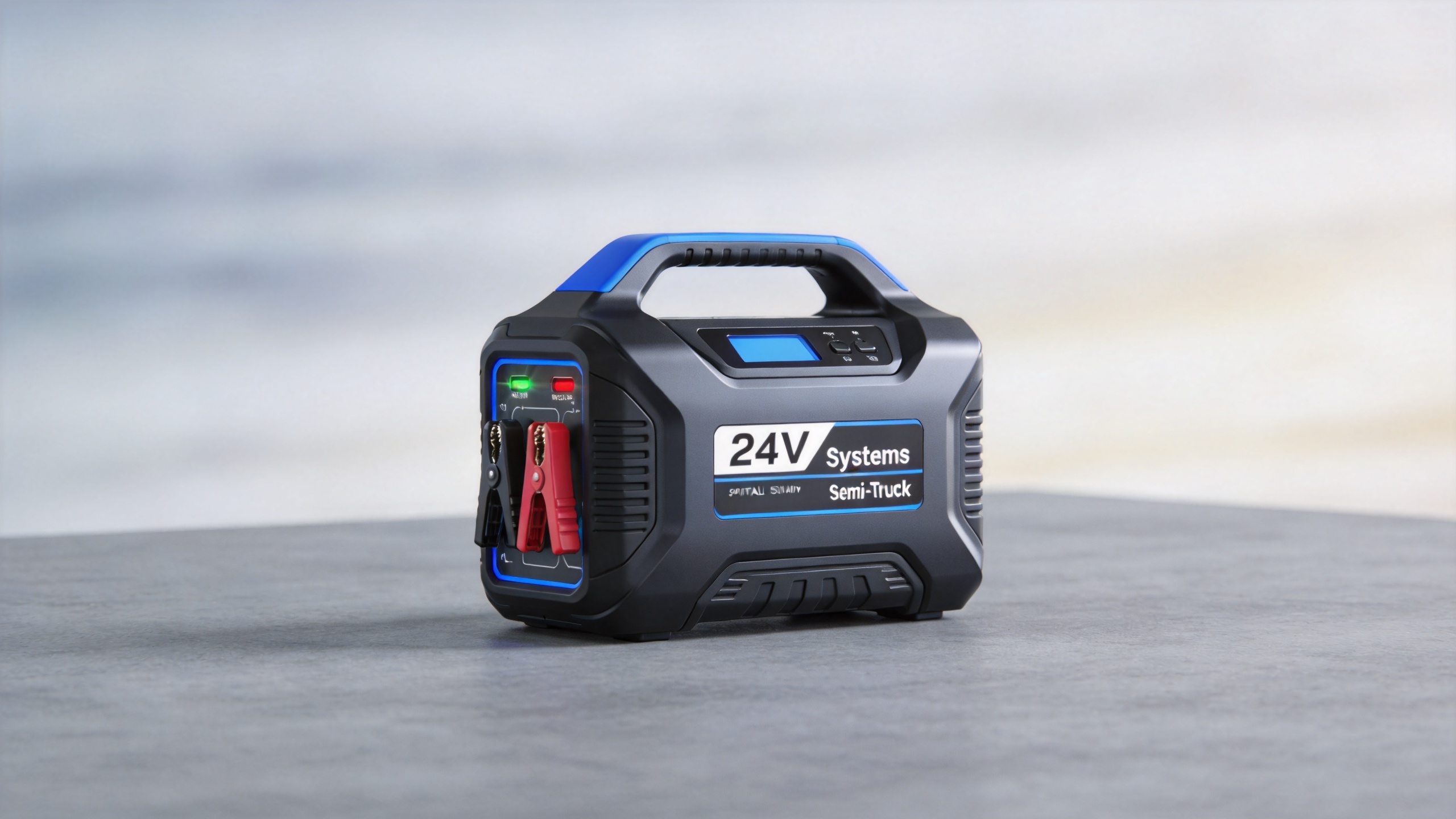
Finding a reliable power source for heavy-duty 24V systems or large semi-truck engines requires a different approach than selecting a standard unit for a passenger car. This guide focuses on the technical demands of high-displacement diesel engines and the specific power requirements of dual-battery setups, helping you identify the best portable jump starter for trucks to keep your fleet moving.
Best Portable Jump Starters for 24V Systems and Semi-Trucks: at a glance
When dealing with 24V systems, you are essentially managing double the voltage of a standard vehicle. Most consumer-grade lithium jump starters are designed exclusively for 12V systems, meaning they will not work on semi-trucks that use a series-connected 24V configuration. Professional-grade equipment, such as the NOCO Boost Max GB250, is engineered to handle the immense cranking amperage required to turn over massive diesel engines.
For operators who manage a mix of 12V and 24V vehicles, portability is often compromised by the sheer size of the battery capacity required. However, modern lithium-ion technology has allowed for more compact designs that still offer high peak currents.
- 12V Systems: Suitable for most light-duty trucks and SUVs.
- 24V Systems: Specifically for heavy-duty semi-trucks, construction equipment, and industrial machinery.
- Safety Features: Reverse polarity protection and spark-proof technology are non-negotiable for high-amperage units.
- Capacity: Always look for units that offer sustained cranking power rather than just "peak" burst numbers.
Understanding the Power Requirements of Semi-Trucks
Semi-trucks often use two large 12V batteries wired in series to create a 24V system. This setup provides the necessary torque for the starter motor to overcome the high compression ratios found in diesel engines. If you attempt to jump-start a 24V system with a 12V unit, you risk damaging both the jump starter and the truck’s sensitive electronic control units (ECUs).
Conversely, a 24V jump starter should never be connected to a 12V system. The discrepancy in voltage will likely fry the truck's electrical components. Therefore, the best portable jump starter for trucks is one that either explicitly supports 24V or offers a specialized dual-voltage selection mode.
- Cranking Amps (CA): The amount of current the unit can provide for 30 seconds at 32°F.
- Cold Cranking Amps (CCA): The current provided at 0°F, which is critical for winter operations.
- Battery Chemistry: Lithium-ion offers portability, while lead-acid (like the Clore Automotive JNC770R) provides consistent, heavy-duty performance for shop environments.
Head-to-head: Lithium vs. Lead-Acid
The debate between lithium-ion and lead-acid jump starters usually comes down to weight versus reliability. Lithium units, such as the NOCO Boost X GBX155, are lightweight and hold a charge for months, making them ideal for emergency road service kits. Lead-acid units, like the Clore Automotive JNC660, are bulky and heavy but excel in cold-weather performance and high-frequency usage.
If you are a driver who needs to keep a unit in the cab, lithium is the superior choice. If you are a fleet manager keeping a unit in a maintenance bay, lead-acid provides a more robust long-term solution.
- Lithium Pros: Compact, holds charge for months, faster recharge times.
- Lithium Cons: Can be sensitive to extreme temperature fluctuations.
- Lead-Acid Pros: Massive cranking power, durable casing, proven technology.
- Lead-Acid Cons: Heavy, requires regular charging to prevent sulfation.
The Role of Peak Amperage in Heavy-Duty Applications
Marketing materials often highlight "peak amperage" because it is a large, impressive number. However, peak amperage only tells you what the unit can do for a fraction of a second. For a semi-truck, you need sustained power to get the engine turning. A unit like the NOCO Boost GB150 provides significant burst power, but it is essential to match that power to the specific engine size of your truck.
When choosing the best portable jump starter for trucks, look for the "cranking" rating rather than the "peak" rating. A higher cranking rating indicates the unit can sustain the high demand of a diesel starter motor long enough to ignite the engine.
- Small Diesel Engines: 1,000–2,000 Amps.
- Large Semi-Truck Engines: 3,000+ Amps (often requiring parallel 24V configurations).
- Battery Health: If your truck's batteries are completely dead, you need a unit with a "Manual Override" feature to force power into the system.
Evaluating the NOCO Ecosystem
NOCO has established itself as a leader in the jump-starting space, offering a wide range of products for different needs. For smaller 12V trucks, the NOCO Boost GB40 or NOCO Boost GB70 are standard choices. For heavier-duty needs, the NOCO Boost X GBX55 offers faster charging, while the NOCO Boost X GBX155 steps up the power for larger engines.
When you move into the commercial sector, the NOCO Boost Max GB250 is the flagship. It is designed specifically for high-displacement engines that require significant current to initiate a start.
- GBX Series: Features USB-C fast charging, which is a major convenience for modern fleets.
- GB Series: The tried-and-true workhorses of the portable jump starter world.
- Max Series: Built for the most demanding industrial and commercial applications.
Alternative Options: GOOLOO and AstroAI
While NOCO dominates the premium market, brands like GOOLOO and AstroAI provide excellent value for budget-conscious operators. The GOOLOO GP4000 and the GOOLOO GT4000 Arctic are designed to function in extreme conditions, which is vital for long-haul truckers driving through varying climates.
The AstroAI S8 Ultra is another strong contender for those who need a balance of price and performance. These units often include features like integrated flashlights and multiple USB ports for charging mobile devices, making them multi-functional tools for the road.
- GOOLOO Arctic: Specifically engineered to handle cold-start issues, which is a common pain point for truckers.
- AstroAI: Focuses on user-friendly interfaces and robust safety protections.
- Value Proposition: These units often provide 90% of the functionality of professional-grade tools at a fraction of the cost.
Pricing and Value Considerations
When budgeting for a jump starter, you must factor in the "cost of downtime." A single missed delivery due to a dead battery can cost more than the price of the most expensive jump starter on the market. Therefore, the best portable jump starter for trucks is one that offers the highest reliability.
Professional-grade units like those from Clore Automotive represent an investment in equipment longevity. Meanwhile, consumer-grade units are often replaced every few years. Calculate the expected lifespan of the unit against the number of jump starts you expect to perform annually.
- Entry-Level ($100–$200): Good for occasional emergencies in personal trucks.
- Mid-Range ($200–$400): Suitable for daily use in standard commercial vehicles.
- Professional/Industrial ($500+): Required for 24V systems and heavy-duty semi-trucks.
Who should pick which?
Choosing the right unit depends on your specific vehicle type and frequency of use. If you are an owner-operator with a single truck, a high-end lithium unit is likely sufficient. If you manage a fleet of 50 trucks, you likely need a mix of portable lithium units for drivers and heavy-duty lead-acid carts for the shop.
Refer to The 8 Best Professional-Grade Portable Jump Starters of 2026 if you are looking for equipment that can handle daily, high-intensity use. For general advice, The Best Portable Jump Starters of 2026 provides a broader overview of the current market.
- The Solo Driver: Prioritize weight, ease of storage, and battery longevity.
- The Fleet Manager: Prioritize durability, ease of repair, and the ability to handle multiple starts per day.
- The Cold-Weather Driver: Prioritize units specifically rated for sub-zero performance.
Maintenance and Care for Longevity
Even the best portable jump starter for trucks will fail if not maintained correctly. Lithium units should be kept at a 50%–80% charge level if stored for long periods. Lead-acid units require being kept plugged into a trickle charger when not in use to prevent the internal battery from degrading.
Always inspect your cables for fraying and ensure the clamps are clean. Corrosion on the clamps can significantly reduce the amount of power that reaches the truck's battery, rendering even the most powerful unit ineffective.
- Storage: Keep the unit in a dry, temperature-controlled environment whenever possible.
- Charging: Follow the manufacturer's recommendations for recharge intervals.
- Inspection: Regularly check the connection points and cable integrity.
FAQ
Can I use a 12V jump starter on a 24V truck?
No, never. Connecting a 12V jump starter to a 24V system will likely result in equipment failure and can cause severe damage to the truck's electrical system, including the ECU and other sensitive electronics.
How do I know if my truck is 12V or 24V?
Most modern passenger trucks are 12V. Heavy-duty semi-trucks often use a 24V system (two 12V batteries in series). Check your owner's manual or look at the battery labels. If you see two batteries connected with a cable running from the positive of one to the negative of the other, you are likely looking at a 24V system.
What is the advantage of a lithium jump starter over lead-acid?
Lithium jump starters are significantly lighter, more compact, and hold their charge for much longer periods. They are ideal for emergency kits where space is at a premium. Lead-acid units are generally more durable and provide more consistent power in extreme cold, but they are heavy and require more maintenance.
Why does my jump starter show a "Reverse Polarity" error?
This usually means the clamps are connected to the wrong terminals (positive to negative and vice-versa). Most modern units, such as those from NOCO, have built-in safety features that prevent the unit from outputting power until the connection is corrected.
How often should I charge my portable jump starter?
For lithium units, it is recommended to check the charge level every 3 to 6 months. For lead-acid units, they should be kept on a charger whenever they are not in use to ensure they are ready for an emergency and to maintain battery health.
Verdict
Selecting the best portable jump starter for trucks is a balance of power, portability, and reliability. For those operating 24V heavy-duty systems, professional-grade equipment like the NOCO Boost Max GB250 is the gold standard, providing the necessary cranking power to ensure you are never stranded. If your needs are more modest, the GOOLOO GT4000 Arctic offers excellent performance in challenging environments. Regardless of your choice, ensure the unit is rated for your vehicle's specific voltage and engine displacement, and always prioritize safety by choosing a model with built-in reverse polarity and spark-proof protections. For further comparisons, you can review The Best Portable Jump Starters for 2026: Expert Tested to see how these units stack up in real-world scenarios.