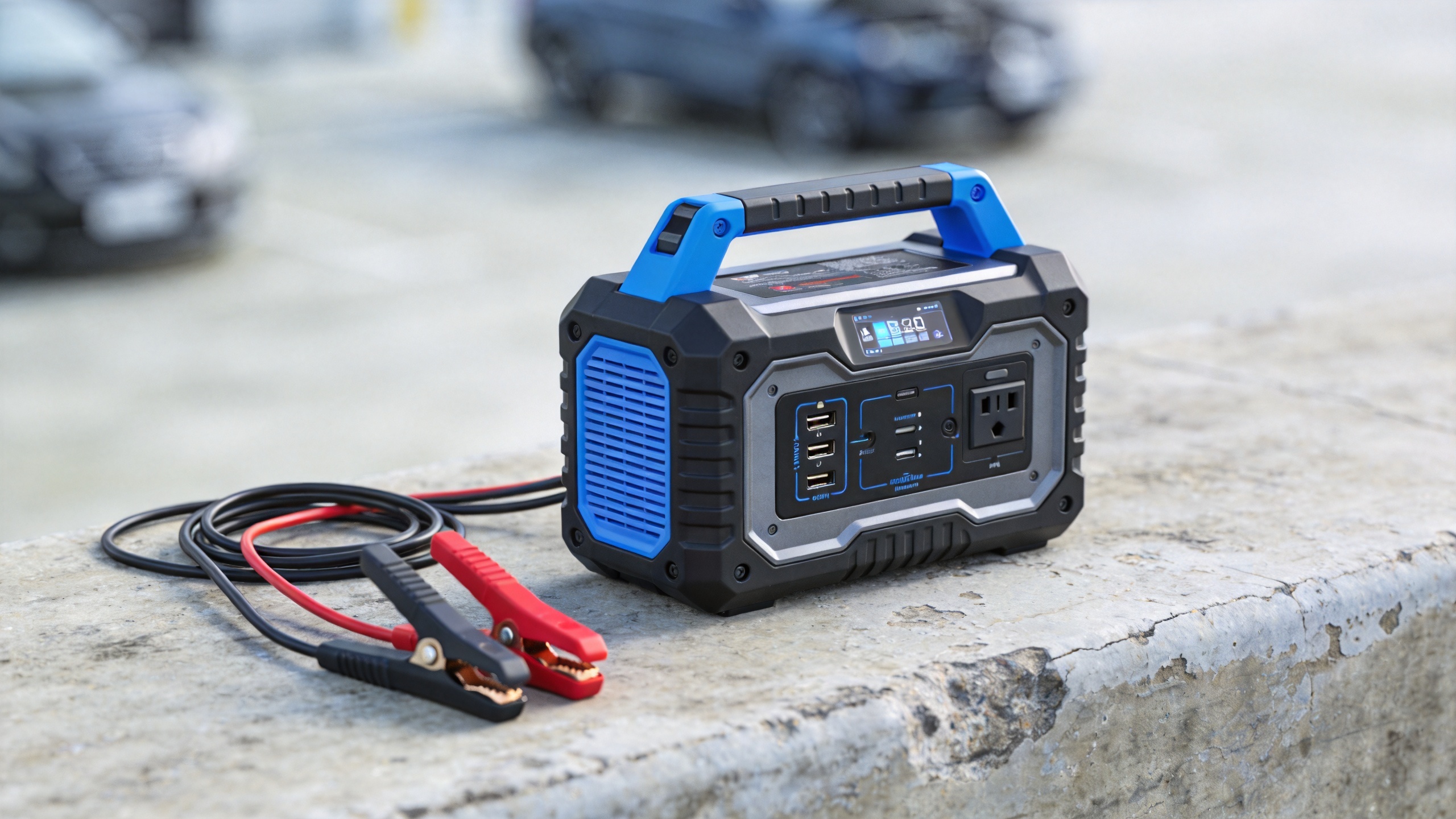
Finding the best portable jump starter for trucks requires balancing raw cranking amperage with the specific electrical demands of large-displacement diesel and gasoline engines. This guide cuts through the marketing jargon to help you select a reliable power source capable of reviving heavy-duty vehicles in demanding conditions.
Heavy-Duty Jump Starting Solutions for Large Engines: at a glance
When dealing with large trucks, standard consumer-grade jump starters often fail because they lack the "peak" current required to overcome the high compression ratios of diesel engines. A heavy-duty unit must provide a sustained burst of energy to turn over the starter motor without damaging the internal lithium or lead-acid cells.
For many users, the choice comes down to the chemistry of the jump starter. Lithium-ion units, like the NOCO Boost X GBX155 or GOOLOO GT4000 Arctic, offer incredible power-to-weight ratios, making them easy to store in a cab. Conversely, traditional lead-acid units like the Clore Automotive JNC660 provide a more consistent, rugged performance that professional mechanics often prefer for daily shop use.
- Lithium: Lightweight, holds a charge for months, features USB charging ports for devices.
- Lead-Acid: Heavier, more robust, generally performs better in extreme cold, but requires frequent recharging.
Understanding Cranking Amps vs. Peak Amps
Marketing labels often highlight "Peak Amps," but this is frequently a misleading metric. For a truck owner, "Cranking Amps" (the power delivered during the actual start) is the only number that matters. A jump starter might boast 4000 peak amps, but if it cannot sustain a high current for the 3-5 seconds it takes to fire a cold diesel engine, it will fail.
When evaluating the GOOLOO GP4000 or the NOCO Boost GB150, look for units that offer high "Cold Cranking Amps" (CCA) compatibility. If you are operating in freezing temperatures, the internal chemistry of your jump starter becomes critical. Lithium batteries struggle in sub-zero weather unless they are specifically designed with pre-heat technology or high-discharge cells.
- Peak Amps: The theoretical maximum burst for a fraction of a second.
- Cranking Amps: The actual sustained power needed to turn the engine over.
Head-to-head: Lithium Powerhouses
The market is currently dominated by high-performance lithium units that have replaced bulky traditional boxes for many roadside emergencies. The NOCO Boost X GBX55 is an excellent mid-range option, but for heavy-duty truck owners, the NOCO Boost Max GB250 represents the gold standard for massive engine displacement.
Comparing these to the Primedura DM1264, we see a shift toward faster charging speeds and more intelligent protection circuitry. Modern units now include reverse-polarity protection, spark-proof technology, and over-charge protection, which are essential when working on expensive truck electrical systems.
- NOCO Boost X GBX155: Best for rapid charging and high-output diesel needs.
- GOOLOO GT4000 Arctic: Specifically engineered for extreme cold performance.
Pricing and Value Considerations
Investing in the best portable jump starter for trucks is an insurance policy against being stranded. While budget units like the AstroAI S8 Ultra are fantastic for passenger cars and light SUVs, they may struggle if you own a heavy-duty pickup with dual batteries or a large diesel engine.
Professional-grade units like the Clore Automotive JNC770R carry a higher price tag, but they offer longevity and the ability to replace internal batteries, which is a major cost-saver over a 5-10 year period. When calculating value, consider the cost of a single tow truck call versus the price of a high-quality jump starter.
- Entry-Level ($80–$150): Suitable for light-duty trucks and gas engines.
- Professional/Heavy-Duty ($200–$500+): Required for commercial trucks, heavy diesels, and frequent use.
Who should pick which?
Choosing the right unit depends entirely on your vehicle type and usage frequency. If you are an over-the-road trucker, you need a unit that can handle 24V systems or large diesel blocks. In such cases, a unit like the NOCO Boost GB150 is often the baseline requirement.
For the weekend warrior or the owner of a light-duty diesel truck, the NOCO Boost GB40 might be sufficient if the engine is warm, but for cold starts, moving up to the GOOLOO GP4000 provides the necessary overhead to ensure the engine kicks over on the first turn.
- Fleet Managers: Should prioritize the Clore Automotive JNC660 for its durability in shop environments.
- Individual Truck Owners: Should prioritize the NOCO Boost X GBX155 for its portability and ease of use.
The Role of Safety Features
Safety is non-negotiable when dealing with high-amperage batteries. The risk of short-circuiting a truck's sensitive ECU (Engine Control Unit) is real. Modern jump starters now include sophisticated "Smart Clamps" that detect the battery voltage before allowing power to flow.
If you are looking for the safest possible experience, the NOCO Boost series is widely regarded for its robust safety protocols. These units will not spark if the clamps touch, and they provide visual feedback if the connection is reversed, preventing damage to both the vehicle and the user.
- Reverse Polarity Protection: Prevents damage if clamps are connected to the wrong terminals.
- Spark-Proof Technology: Ensures no arcing occurs when connecting the clamps.
Maintenance of Your Jump Starter
Even the best portable jump starter for trucks requires maintenance. Lithium-ion batteries should be topped off every 3 to 6 months, even if they haven't been used. Allowing a lithium battery to sit at 0% charge for an extended period can lead to permanent cell degradation.
For lead-acid units like the Clore Automotive JNC770R, the rules are different. These units should be kept on a trickle charger whenever they are not in use to maintain the health of the lead plates. Ignoring this will result in a battery that cannot hold a charge when you need it most.
- Lithium: Store in a cool, dry place; charge periodically.
- Lead-Acid: Keep plugged into a maintenance charger when stored in a garage.
Comparison to Professional Shop Equipment
While portable units have become incredibly powerful, they are not always a 1:1 replacement for large, wheeled shop chargers. A wheeled unit draws power directly from a wall outlet, providing unlimited cranking time. Portable units, however, are limited by their internal battery capacity.
If you are running a fleet or a repair shop, you should read our guide on The Ultimate Guide to Heavy-Duty Jump Starters for Commercial and Fleet Use to understand when to use a portable unit versus a stationary shop charger. For emergency roadside assistance, the portable units mentioned here are more than capable, provided they are sized correctly for your engine displacement.
- Portable: Best for mobility, roadside emergencies, and remote work.
- Wheeled Shop Units: Best for heavy, repeated use in a stationary environment.
Frequently Asked Questions
Can a portable jump starter damage my truck's computer?
Modern jump starters with built-in protection circuitry, such as the NOCO Boost X GBX55, are designed to prevent voltage spikes that could damage sensitive electronics. Always ensure your unit has "smart" clamps before connecting it to a modern vehicle.
How do I know if my jump starter is powerful enough for my diesel engine?
Check your engine's displacement (e.g., 6.7L). Diesel engines require significantly more power to start than gas engines due to higher compression. Look for units like the NOCO Boost Max GB250 that explicitly state they are rated for large diesel engines.
Why does my jump starter fail in the winter?
Cold temperatures slow down the chemical reaction in batteries, reducing their available power. If you live in a cold climate, choose a unit like the GOOLOO GT4000 Arctic, which is specifically designed to perform in sub-zero conditions.
Is it better to buy a jump starter with an air compressor?
Some users prefer the convenience of an all-in-one tool. However, if you are looking for the absolute best performance for jump starting, separate units are often more reliable. For more information, check Are Portable Jump Starter Air Compressor Combos Worth It?.
How long do portable jump starters last?
Lithium units typically last 3-5 years with proper care. Lead-acid units can last longer if the battery is replaced, but the casing and cables may eventually wear out. Always follow the manufacturer's storage guidelines to maximize lifespan.
Verdict
Selecting the best portable jump starter for trucks is about matching the unit's capability to your specific engine size and climate. For those who prioritize power and the latest technology, the NOCO Boost X GBX155 or the NOCO Boost Max GB250 stand out as industry leaders. If you are working in extreme environments, the GOOLOO GT4000 Arctic offers specialized protection that is hard to beat.
Regardless of your choice, ensure you keep your device charged and stored in an accessible location. A jump starter is only as useful as its current state of charge. For further guidance on selecting the right tool for your specific vehicle, explore our resources on Selecting the Right Jump Starter for Your Vehicle Type.