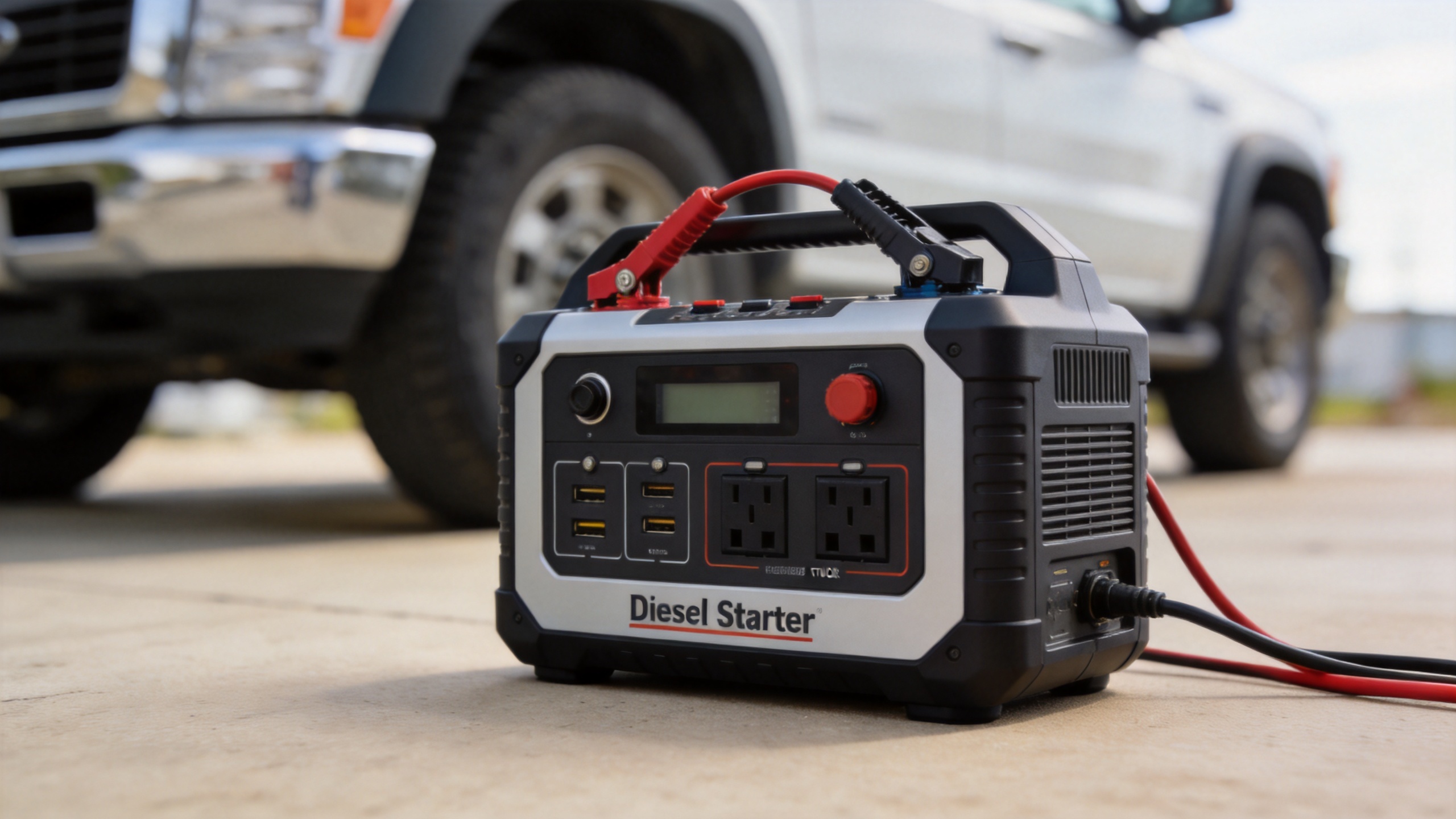
Finding the right equipment for a diesel engine requires more than just picking a standard battery pack; you need high-cranking amperage to overcome the significant compression ratios of heavy-duty motors. Selecting the best portable jump starter for trucks ensures you aren't left stranded when a glow plug cycle or cold morning saps your battery’s strength.
Best High-Capacity Jump Starters for Diesel Trucks: at a glance
Diesel engines demand high peak currents and robust battery chemistry to initiate the combustion process. Unlike gasoline engines, which ignite via spark, diesel engines rely on high heat generated by compression, requiring the starter motor to turn the crankshaft rapidly.
To help you navigate the market, we have categorized the top contenders based on their output and reliability:
- Professional Lithium Power: The NOCO Boost X GBX155 and NOCO Boost GB150 offer massive cranking power in a compact, portable form factor.
- Budget-Friendly High Output: The GOOLOO GP4000 and GOOLOO GT4000 Arctic provide impressive performance for those who need power without the premium price tag.
- Industry Standard Lead-Acid: The Clore Automotive JNC660 and Clore Automotive JNC770R remain the gold standard for workshop and commercial reliability.
- Compact Daily Drivers: For smaller diesel trucks or SUVs, the AstroAI S8 Ultra and NOCO Boost GB70 serve as excellent emergency kit additions.
Head-to-head: Lithium vs. Lead-Acid for Diesel Engines
When choosing the best portable jump starter for trucks, the core debate often centers on lithium-ion versus lead-acid technology. Lithium units, such as the NOCO Boost Max GB250, are incredibly lightweight, hold a charge for months, and offer rapid charging. They are the ideal choice for keeping in a truck cabin or under-seat storage.
Conversely, lead-acid units like the Clore Automotive JNC660 use AGM (Absorbent Glass Mat) batteries. These are significantly heavier and bulkier but provide consistent, high-amperage output that is less susceptible to extreme temperature fluctuations.
- Lithium Pros: Portability, low self-discharge rate, USB-C charging.
- Lithium Cons: Can be sensitive to extreme cold, higher cost for peak capacity.
- Lead-Acid Pros: Massive cold-cranking amps, rugged build, no risk of lithium thermal runaway.
- Lead-Acid Cons: Heavy, requires regular recharging to prevent sulfation.
Understanding Cranking Amps for Diesel Engines
Diesel engines are notoriously difficult to start when the battery is weak. You must look beyond "peak" amps and focus on "cranking" or "starting" amps. While a marketing label might claim 4000A, the actual sustained current delivered during the first two seconds of the crank is what determines success.
For a standard 6.7L diesel engine, you should aim for a unit that provides at least 1500–2000 actual cranking amps. The NOCO Boost X GBX55 is excellent for lighter diesel applications, but for a full-size heavy-duty truck, you should lean toward the NOCO Boost X GBX155 or the Primedura DM1264 to ensure you have enough overhead to turn the engine over on the first attempt.
Pricing and Value Considerations
Investing in a jump starter is essentially purchasing insurance against a missed shift or a late delivery. Entry-level units like the NOCO Boost GB40 are priced for passenger cars and light-duty SUVs, but they may struggle with large diesel displacement.
When analyzing pricing, consider the "cost-per-start" over the life of the unit. A professional-grade unit like the Clore Automotive JNC770R may cost more upfront, but its ability to survive hundreds of shop-floor jump starts makes it cheaper in the long run than replacing a consumer-grade lithium battery every two years.
- Under $100: Best for occasional emergencies and smaller engines.
- $150–$300: The "sweet spot" for most diesel truck owners; offers the best balance of power and portability.
- $400+: Professional-grade gear designed for fleet managers and heavy-duty mechanics.
Who should pick which?
Determining the best portable jump starter for trucks depends entirely on your specific use case. If you are an over-the-road driver who needs to keep gear in a sleeper cab, weight and size are your primary constraints. In this scenario, the GOOLOO GT4000 Arctic is a fantastic choice because it is engineered specifically to perform in sub-zero temperatures, which is when diesel engines are most likely to fail.
If you are a contractor or a farmer who keeps a jump starter in a tool shed or the back of a utility truck, the Clore Automotive JNC660 is your best bet. Its rugged plastic housing and heavy-duty clamps are built to withstand the abuse of a worksite, and you don’t have to worry about leaving it in the cold for extended periods.
Safety Features to Look For
Modern jump starters have moved far beyond the "dumb" cables of the past. When working with high-compression diesel engines, you are dealing with significant electrical loads. Safety features are non-negotiable to prevent damage to your truck’s sensitive ECU (Electronic Control Unit).
Look for units that feature:
- Reverse Polarity Protection: Prevents sparks and damage if you accidentally swap the positive and negative clamps.
- Short Circuit Protection: Automatically cuts power if the clamps touch.
- Over-Temperature Protection: Essential for lithium units, which can be damaged if charged or discharged at extreme heat.
- Spark-Proof Technology: Found in the NOCO Boost series, this ensures no current flows until a proper connection is detected.
The Role of Cold Temperature Performance
Diesel engines have a "cold start" disadvantage. In freezing temperatures, the oil thickens, and the battery's chemical reaction slows down, creating a "perfect storm" for a no-start condition. Many lithium jump starters struggle in these conditions because the internal battery cells lose their ability to discharge high current when they are cold.
The GOOLOO GT4000 Arctic is specifically designed to mitigate this, utilizing pre-heating technology or advanced cell chemistry to ensure power delivery even when the mercury drops. If you live in a climate where winter temperatures regularly fall below freezing, prioritize units with "Arctic" or "Cold-Start" designations.
Maintenance Tips for Longevity
Even the best portable jump starter for trucks will fail if it isn't maintained properly. Lithium units should be kept at a 50–80% charge level if they are going to be stored for a long time. Storing them at 100% for months can degrade the chemistry, while storing them at 0% can trigger the battery’s safety lockout.
For lead-acid units like the Clore Automotive JNC770R, the most critical maintenance step is keeping the unit plugged into a wall outlet whenever it is not in use. Lead-acid batteries suffer from "sulfation" if left in a discharged state, which will permanently reduce their capacity.
- Monthly Check: Verify your lithium unit has at least 3 bars of charge.
- Clamp Care: Clean the copper teeth of your clamps with a wire brush to ensure a solid connection to the battery terminals.
- Cable Inspection: Check the insulation on your cables for cracks or fraying before every use.
Comparison with Professional Fleet Solutions
For those managing a fleet, the requirements change. You need units that can handle multiple jump starts in a single day without needing a recharge. While a consumer-grade unit might handle one or two starts, a professional fleet manager should look at the NOCO Boost Max GB250.
This unit is designed to handle the massive current draw required by commercial-grade engines. If you are comparing options, refer to The Ultimate Guide to Heavy-Duty Jump Starters for Commercial and Fleet Use to understand the difference between occasional personal use and high-frequency commercial requirements.
FAQ: Frequently Asked Questions
Can I use a small jump starter on a big diesel engine?
Generally, no. A jump starter designed for a 2.0L gasoline engine will likely trip its internal safety fuse when faced with the high resistance of a cold diesel motor. Always check the manufacturer's rating for "Diesel Engine Displacement" before purchasing.
Do I need to disconnect my truck battery to use these?
No. All the modern jump starters mentioned, such as the NOCO Boost X GBX155 and GOOLOO GP4000, are designed to be used while the battery is still connected to the vehicle. In fact, keeping the battery connected helps absorb the voltage spike once the engine starts.
How long do these jump starters last?
Lithium-ion jump starters typically last for 500 to 1,000 charge cycles if handled correctly. Lead-acid units can last for several years, but the internal battery will eventually need to be replaced.
Is it safe to leave a jump starter in a hot truck?
Lithium jump starters should not be left in direct sunlight or in a vehicle cabin where temperatures exceed 140°F (60°C). Extreme heat can cause the battery to swell or lose capacity. If you live in a hot climate, prioritize a lead-acid unit or store your lithium unit in a cooler, shaded area.
What is the difference between Peak Amps and Cranking Amps?
Peak amps represent the maximum current the unit can output for a microsecond. Cranking amps represent the actual current delivered during the engine-starting process. Always prioritize the Cranking Amps or the manufacturer's engine displacement rating over the "Peak" marketing number.
Verdict
Finding the best portable jump starter for trucks is a balance between your engine size, your local climate, and your storage capabilities. For the majority of diesel truck owners, the NOCO Boost X GBX155 provides the most reliable blend of high-output power and modern safety features. If you operate in extreme cold, the GOOLOO GT4000 Arctic is an essential investment to ensure you aren't left in the frost.
For those who prioritize raw, long-term durability and don't mind the extra weight, the Clore Automotive JNC660 remains the undisputed champion of the workshop. Regardless of your choice, ensure you keep your device charged and your clamps clean—the best jump starter is the one that is ready when you need it most. For further reading on selecting the right gear, check out our comprehensive guide on Selecting the Right Jump Starter for Your Vehicle Type.