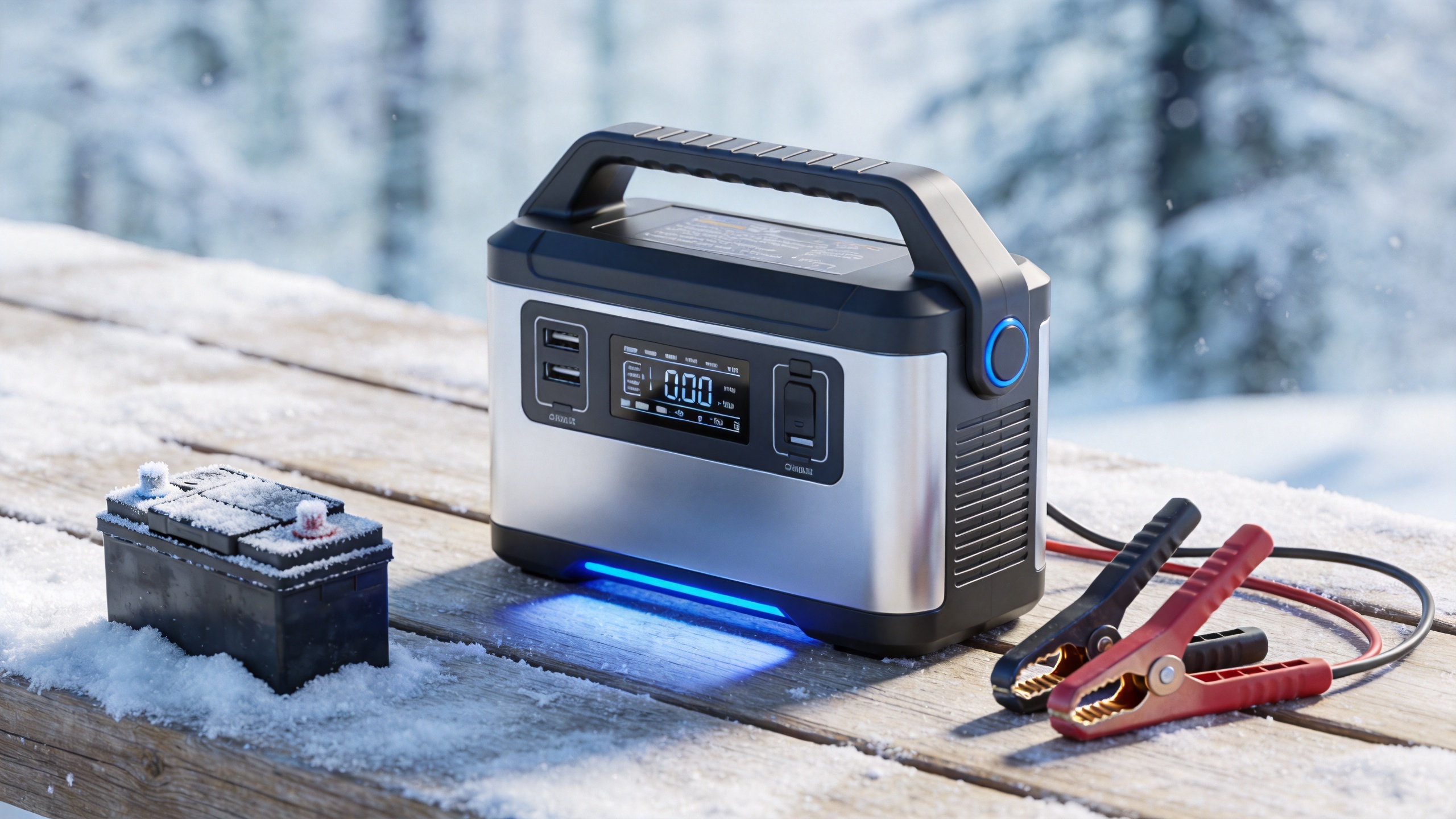
Lithium-ion jump starters are marvels of modern engineering, packing massive cranking power into a device that fits in your glovebox. However, their chemistry makes them highly sensitive to temperature fluctuations, meaning knowing how to store portable jump starter for cold weather is the single most important factor in ensuring your device works when you need it most.
Why this matters
When temperatures drop, the chemical reactions inside a lithium-ion battery slow down significantly. This phenomenon, known as internal resistance, prevents the battery from discharging the high current required to turn over a cold, sluggish engine. If you leave your device in a freezing vehicle, you aren't just losing temporary capacity; you are risking permanent degradation of the battery cells.
Many users find that their units, such as the GOOLOO GT4000 Arctic, are specifically engineered with internal heating elements or advanced thermal management to combat this. However, even the most robust units—including the NOCO Boost X GBX55 or the NOCO Boost GB40—will perform better if they aren't subjected to sub-zero temperatures for weeks on end. Proper storage preserves the cycle life of your unit, ensuring you get years of service rather than replacing it after a single winter season.
What you will need
To properly maintain your jump starter through the winter months, you don't need specialized equipment, but you do need a disciplined routine. The goal is to keep the battery in a "Goldilocks zone"—not too hot, not too cold, and never fully depleted.
- A climate-controlled storage space: A shelf in your home, a heated garage, or an indoor mudroom.
- A dedicated charging cable: Always keep the original USB-C or proprietary cable provided with your AstroAI S8 Ultra or Primedura DM1264.
- A monitoring schedule: A simple calendar reminder or phone alert to check the charge level every 30 days.
- A protective carrying case: Most high-quality units come with a semi-rigid case that provides a small layer of insulation against sudden temperature swings.
Step by step
Maintaining your jump starter is less about active labor and more about consistent habit-building. Whether you own a compact unit like the NOCO Boost GB70 or a heavy-duty powerhouse like the NOCO Boost Max GB250, the following steps remain the universal standard for winter care.
Step 1: Remove from the vehicle
The most common mistake is treating a jump starter like a spare tire—something that stays in the trunk 24/7. In winter, your trunk is essentially a freezer. Bring your unit inside your home where the ambient temperature stays between 50°F and 70°F. If you are worried about forgetting it, place it next to your keys or your winter coat so it is always within reach when you head to the car.
Step 2: Perform a "Top-Off" charge
Lithium batteries have a self-discharge rate, which accelerates in the cold. Before you put the unit away for a long period, ensure it is charged to at least 75-80%. If you have a GOOLOO GP4000, use the digital display to verify the exact percentage. Do not store the unit at 100% for months on end, as this can stress the battery chemistry, but never store it below 50% during the winter.
Step 3: Monthly inspection
Once a month, bring your unit out of storage and check the indicator lights. If the charge has dropped significantly, plug it into a wall outlet. This is also the perfect time to inspect the clamps and cables for any signs of brittleness or cracking, which can occur if the unit was exposed to extreme cold previously. For professional-grade tools like the NOCO Boost X GBX155, this quick check ensures that the internal safety circuitry remains calibrated and ready for a high-amperage surge.
The role of battery chemistry
It is worth noting that not all "jump starters" are the same. If you are using a traditional lead-acid unit like the Clore Automotive JNC660 or the Clore Automotive JNC770R, the rules are slightly different. Lead-acid batteries are heavier and more resilient to cold than lithium, but they are also prone to sulfation if left discharged in the cold.
If you are looking for the best device for your specific needs, you can browse The 8 Best Portable Jump Starters for 2026 to compare how different chemistries handle your local climate. Understanding the difference between lithium and lead-acid is essential; learn more in our guide on Lithium vs Lead-Acid Jump Starters: What to Buy.
Common pitfalls
Even with the best intentions, owners often fall into traps that shorten the lifespan of their gear. Avoiding these mistakes is just as important as the maintenance steps themselves.
- Charging while frozen: Never attempt to charge a lithium jump starter immediately after bringing it in from a sub-zero vehicle. The internal cells are too cold to accept a charge safely; doing so can lead to lithium plating, which permanently reduces capacity. Let the unit acclimate to room temperature for at least two hours before plugging it in.
- Ignoring the "Cold Crank" warning: Some advanced units, such as the NOCO Boost GB150, have built-in thermal sensors. If the unit warns you that it is too cold to operate, do not force it. Bringing the unit inside to warm up is the only safe way to restore functionality.
- Leaving it in the glovebox: While convenient, the glovebox is one of the coldest spots in the car. If you must keep the unit in the car, store it in the cabin under a seat or in a center console, which benefits from the car's interior heating system once you start driving.
Choosing the right unit for winter
If you live in a region where temperatures regularly drop below freezing, your choice of hardware matters. Some units are marketed specifically for their ability to perform in extreme environments. Before making a purchase, look at The Best Portable Jump Starters for 2026: Expert Tested to see which models have been stress-tested in cold-weather scenarios.
For those who need a device that stays in the vehicle, consider options with high-capacity reserves. A larger battery has more thermal mass, meaning it takes longer for the internal cells to drop to ambient temperature. You can find recommendations for higher-capacity units in our list of The Best Portable Jump Starters for Automotive Tools in 2026.
FAQ
Can I leave my jump starter in the car overnight in winter?
While most modern jump starters can handle a single night in freezing temperatures, it is not recommended for long-term storage. If you leave it in the car, the battery capacity will be significantly reduced, and you may find the unit unable to start your engine when you actually need it.
How do I know if my jump starter is too cold to use?
Most high-end units feature indicator lights or error codes. If the unit fails to light up or shows a "temperature error" icon, it is likely too cold. Do not force the jump-start; instead, bring the unit inside to warm up for a few hours.
Does cold weather permanently damage the battery?
Yes, if exposed to extreme cold for extended periods while in a low state of charge, the internal cells can suffer permanent capacity loss. This is why learning how to store portable jump starter for cold weather is vital for the longevity of your investment.
Is it better to keep the jump starter fully charged or partially charged?
For long-term storage, 70-80% is the ideal state of charge. Storing a lithium battery at 100% for months can accelerate degradation, while storing it below 50% risks the battery dropping into a "deep discharge" state, which can kill the cells.
Should I buy a lead-acid jump starter for winter instead?
Lead-acid units like the Clore Automotive JNC660 are robust in cold weather, but they are heavy and require more maintenance. If you prioritize portability and ease of use, a high-quality lithium unit is still the better choice, provided you follow proper storage protocols.
Conclusion
Investing in a quality portable jump starter is a smart move for any driver, but the tool is only as good as its maintenance. By keeping your device in a temperature-controlled environment, performing regular "top-off" charges, and avoiding the common pitfall of charging while the unit is still frozen, you ensure that your device will be ready to save the day when the mercury drops. For more advice on choosing the perfect unit for your vehicle, check out our comprehensive guide on Selecting the Right Jump Starter for Your Vehicle Type. Proper care today means a reliable start tomorrow.