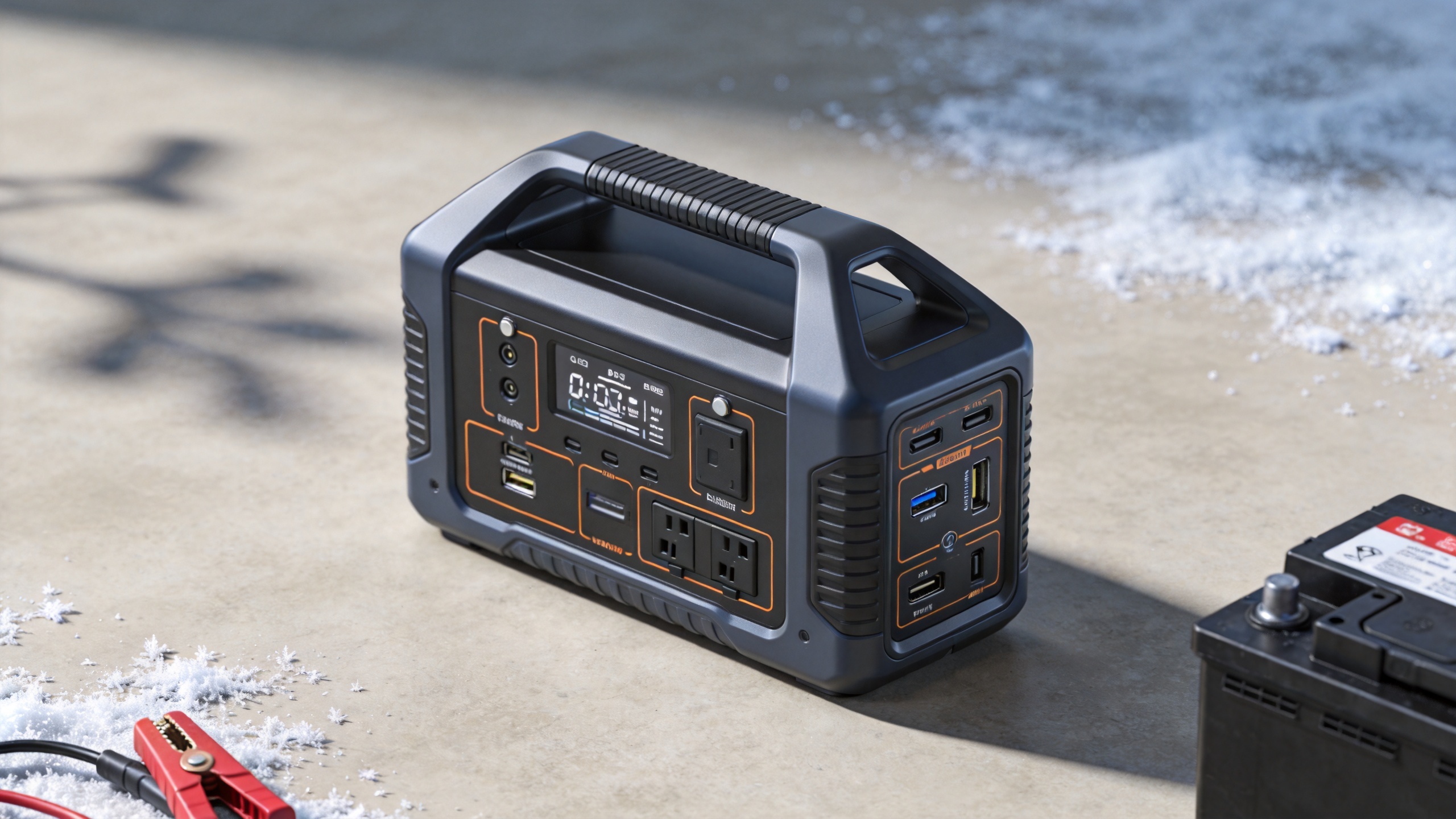
When temperatures plummet, the chemical reactions inside your car battery slow down significantly, often leaving you stranded in the cold. Finding the best car battery jump starter for cold weather requires understanding how lithium and lead-acid technologies behave when the mercury drops, as not every device is built to handle sub-zero conditions.
The Ultimate Guide to Portable Jump Starters for Extreme Weather: at a glance
Extreme weather is the ultimate test for any automotive tool. While standard portable jump starters might perform adequately on a mild spring day, they often fail when internal resistance rises due to freezing temperatures. A high-quality unit for cold climates must feature superior thermal management and a high discharge rate to overcome the sluggishness of a frozen starter motor.
When shopping, look for units that prioritize "cold cranking" capabilities over raw peak amperage. A unit that can maintain a steady voltage output despite the cold is far more valuable than one that boasts high numbers but drops off the moment it touches a freezing terminal.
- Thermal Protection: Look for units with internal heating elements or advanced insulation.
- Discharge Consistency: The ability to provide a sustained burst of power.
- Build Quality: Rugged, impact-resistant housing that won't become brittle in the snow.
- Safety Features: Spark-proof technology and reverse polarity protection are critical when your hands are numb and visibility is low.
Understanding Cold Cranking Amps (CCA) in Portable Units
Many consumers focus solely on the "Peak Amps" advertised on the box, but this is a misleading metric for cold-weather performance. What you actually need is a unit that delivers high sustained current, often measured in terms of its ability to mimic the Cold Cranking Amps of a traditional lead-acid battery.
In freezing weather, the oil in your engine thickens, and your battery’s internal resistance increases. This means your engine requires significantly more power to turn over than it would on a warm day. If your jump starter cannot deliver this initial surge, it will fail to start the engine, regardless of how many "peak" amps it claims to have.
- The 0°F Rule: Always check if the manufacturer specifies performance at 0°F or lower.
- Voltage Drop: Ensure the unit maintains at least 12V under load during the cranking process.
- Capacity vs. Output: A large capacity (mAh) is good for multiple starts, but high discharge output is what actually turns the engine.
Head-to-head: Lithium vs. Lead-Acid for Winter
The debate between lithium-ion and lead-acid jump starters is particularly relevant in cold climates. Lead-acid units, like the Clore Automotive JNC660, are traditional workhorses. They are heavy and bulky, but they are generally less sensitive to extreme temperature fluctuations compared to older lithium designs.
However, modern lithium technology has evolved. Advanced units like the GOOLOO GT4000 Arctic are specifically engineered for these conditions. They use specialized cells that retain performance in sub-zero environments, providing the convenience of a compact, lightweight device without the typical lithium "cold-soak" failure.
- Lead-Acid Pros: Reliable, high current, less expensive, robust.
- Lead-Acid Cons: Heavy, requires frequent recharging, prone to sulfation if left uncharged.
- Lithium Pros: Compact, holds a charge for months, high power-to-weight ratio.
- Lithium Cons: Can be sensitive to extreme cold unless specifically "Arctic" rated.
The Role of Professional-Grade Equipment
If you live in a region with severe winters, relying on a budget-tier hobbyist jump starter is a gamble. Professional-grade equipment, such as the Clore Automotive JNC770R, is designed for repeated use in harsh environments. These units feature heavy-duty cables and clamps that maintain flexibility even when the temperature hits the negatives.
When you compare these to consumer models, the difference is in the internal components. Professional units use higher-gauge copper wiring and more robust internal batteries that resist the degradation typically caused by deep-cycle winter use. For more on this, see The 8 Best Professional-Grade Portable Jump Starters of 2026.
Selecting the Right Capacity for Your Engine
Engine displacement is the primary factor in determining the capacity you need. A small sedan has vastly different requirements than a heavy-duty diesel truck. If you are operating a 6.7L diesel engine in the winter, you need a unit with massive reserve power, such as the NOCO Boost Max GB250.
Using an undersized unit in the cold is a recipe for failure. The jump starter will likely time out or enter a protection mode before it can successfully turn the engine over. Always choose a unit that is rated for an engine size at least 20-30% larger than what you actually drive to account for the "cold-start penalty."
- Small Engines (Under 2.0L): NOCO Boost GB40 is often sufficient.
- Mid-Size/SUVs: AstroAI S8 Ultra provides a great balance.
- Heavy Duty/Diesel: NOCO Boost GB150 or NOCO Boost X GBX155.
Safety Features for Low-Visibility Emergencies
Winter emergencies often happen at night or during snowstorms. Fumbling with jumper cables in the dark is dangerous. Modern portable jump starters provide a significant safety upgrade by including built-in LED flashlights and, more importantly, spark-proof technology.
Devices like the GOOLOO GP4000 feature intelligent clamps that prevent the unit from firing until a proper connection is detected. This prevents accidental short-circuits, which are a major risk when working with cold, brittle battery terminals that may be covered in corrosion.
Maintenance Secrets for Cold-Weather Longevity
Even the best car battery jump starter for cold weather will fail if it isn't maintained properly. Lithium batteries, in particular, should never be stored in a completely discharged state during winter. If you keep your jump starter in your trunk, the repeated freezing and thawing cycles can degrade the battery chemistry.
- Bring it Inside: Whenever possible, keep your jump starter in the house or a temperature-controlled garage rather than the trunk.
- The 3-Month Rule: Even if you haven't used it, check the charge level every 90 days.
- Terminal Care: Keep your car battery terminals clean. A layer of ice or corrosion will prevent the jump starter from making the necessary contact.
For more detailed care instructions, refer to Portable Jump Starter Maintenance and Longevity Secrets.
Pricing and Value Considerations
While it is tempting to look for the cheapest option, winter performance is where you get what you pay for. A budget unit might save you $50, but if it fails during a blizzard, it becomes a paperweight. When evaluating price, consider the "cost per start" over the lifespan of the device.
Professional-grade units like the NOCO Boost GB70 offer a higher initial investment but provide years of reliable service. If you are looking for a mid-range balance of performance and price, the Primedura DM1264 is a strong contender that provides reliable power without the professional-tier price tag.
Who Should Pick Which
Choosing the right unit comes down to your vehicle type and your environment. If you drive a compact car in a mild winter climate, a standard lithium pack is perfect. If you are a fleet operator or drive a diesel truck in a region with sub-zero temperatures, you need heavy-duty lead-acid or high-capacity lithium-X technology.
- The Daily Commuter: AstroAI S8 Ultra – Reliable, easy to store, and perfect for sedans.
- The Weekend Adventurer: GOOLOO GP4000 – High capacity for larger vehicles and long trips.
- The Professional/Fleet Owner: Clore Automotive JNC770R – Built for daily, heavy-duty use.
- The Extreme Cold Specialist: GOOLOO GT4000 Arctic – Specifically designed for the harshest winter conditions.
FAQ: Frequently Asked Questions
Can I leave my jump starter in my car during winter?
While most modern units are designed to withstand cold, it is not recommended for long-term storage. Extreme cold reduces the battery's ability to hold a charge. For the best performance, bring the unit inside your home and only place it in the vehicle when you expect to need it or for long trips.
How do I know if a jump starter is "Arctic" rated?
Look for specific "Arctic" or "Cold Weather" labeling in the product specifications. These units often use specialized battery cells or internal heating films that allow the unit to function at temperatures as low as -20°F or -40°F.
Will a jump starter work if my car battery is completely dead?
Yes, but you need a unit with a "manual override" or "force start" feature. Some intelligent clamps will not engage if they don't detect any voltage from the car battery. Units like the NOCO Boost X GBX55 allow you to bypass this safety feature to jump a completely flat battery.
How many times can I jump start my car on one charge?
This depends on the capacity of the unit and the size of your engine. Most high-quality lithium units can perform 5-10 jumps on a single charge. However, in extreme cold, this number will drop significantly as the battery works harder to provide the initial cranking current.
Is it safe to jump start a modern car with a lot of electronics?
Yes, provided you use a modern jump starter with built-in surge protection. Older, "dumb" jumper cables can cause voltage spikes that damage sensitive ECUs. Modern units from brands like NOCO or GOOLOO are designed to protect your car's onboard computer systems during the jump process.
Verdict
When the temperature drops, your vehicle's reliability hinges on having the right equipment. For most drivers, the GOOLOO GT4000 Arctic represents the gold standard for cold-weather performance, offering the perfect blend of modern lithium convenience and specialized thermal resilience. If you require a more traditional, heavy-duty solution, the Clore Automotive JNC770R remains an unmatched professional tool for extreme conditions. By selecting a unit that matches your vehicle's engine size and your local climate, you ensure that you are never left stranded in the cold. For a broader look at top-tier options, check out The Best Portable Jump Starters for 2026: Expert Tested.